    Research / from the accounts we run

    Questions we could not answer, so we measured.

    Every study here starts with an argument we kept having with a client and could not settle from opinion. We run the numbers on the accounts we manage, publish the method, and publish the parts where the answer was no.

    Method
    Real client accounts, stated sample sizes, stated limits. No vendor data, no modelled panels, no gated download.
    Study 033,179 keywords, 2 trackers
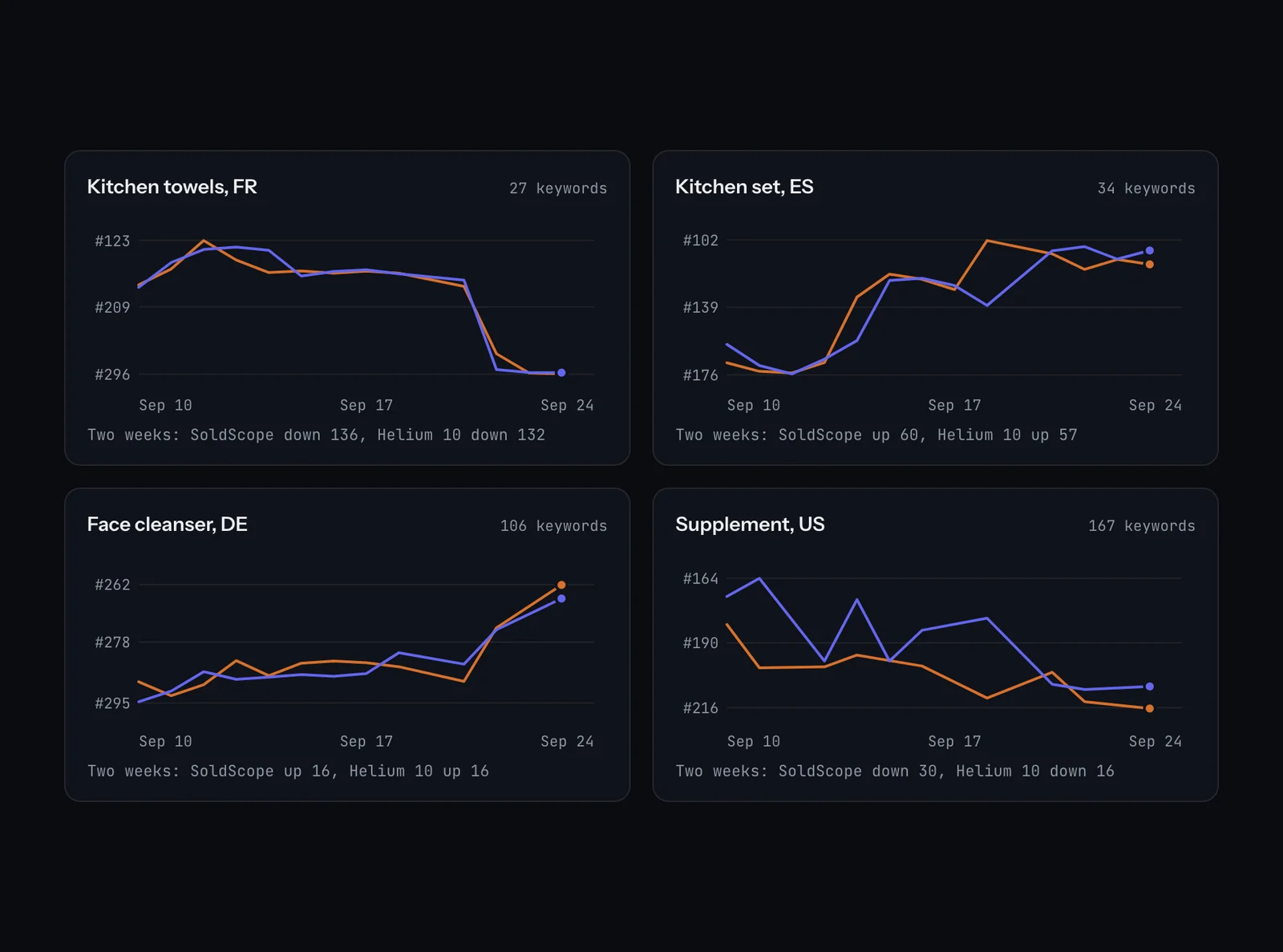
    Helium 10 vs SoldScope: do they show the same organic rank?

    We ran both rank trackers on the same keywords for two weeks, plus DataDive on one brand. They agree on who ranks, on the top 10 and on trends. Further down the exact positions differ, even when they check at the same moment, and the differences go both ways.
    Amazon US · DE · ES · FR · ITSep 20265 brands
    Read the study
    Weighted average organic rank per product in Helium 10 and SoldScope over two weeks: the two lines move together
    Study 02324,203 branded clicks
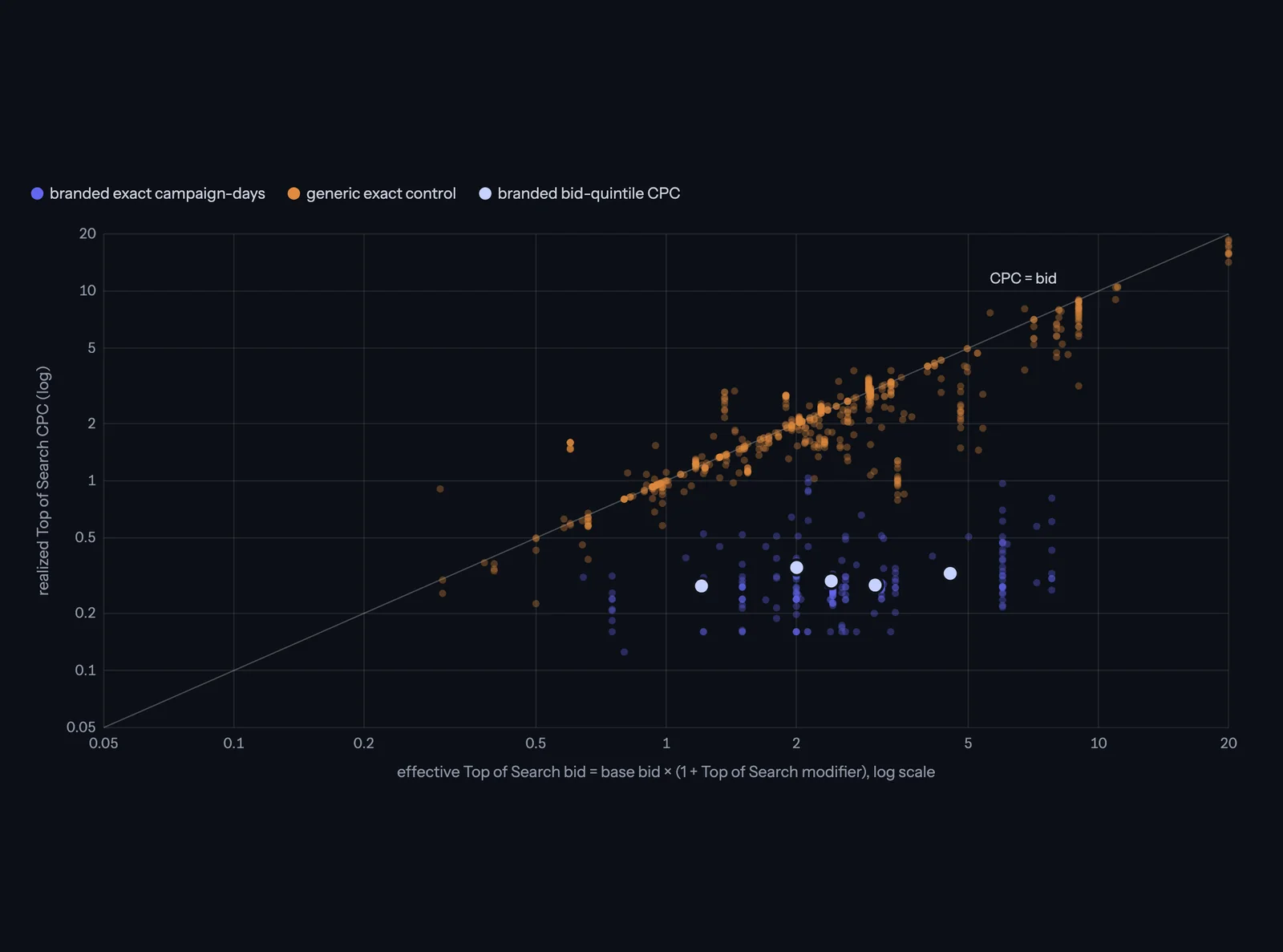
    Why is Top of Search the cheapest placement on your own brand terms?

    Daily bids, placement modifiers and realized CPC per placement on exact-match branded campaigns. Top of Search costs half the product-page click because brands pay 11% of their bid there and 88% on product pages. The modifier buys share, not price.
    Amazon US · UK · DE · FR · ES · ITJan to Sep 20267 brands
    Read the study
    Effective Top of Search bid versus realized CPC: generic keywords track the bid, branded keywords sit flat far below it
    Study 0161,098 keyword-weeks
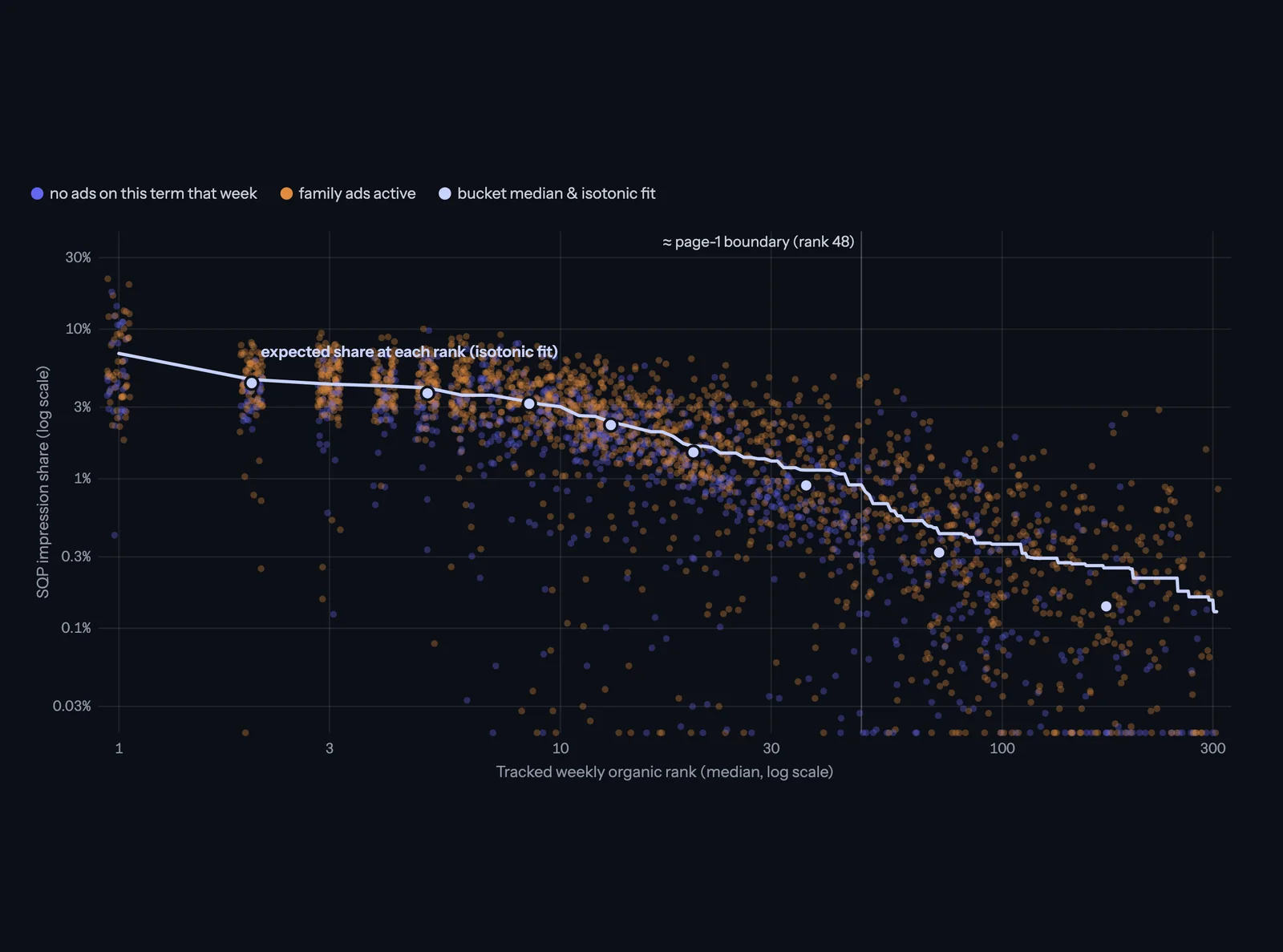
    Does Amazon's SQP data reveal your organic rank?

    We matched daily organic rank against Search Query Performance across six US consumer brands, week by week. Impression share identifies the rank band reliably. It cannot see week-to-week movement.
    Amazon USSep 2025 to Jul 20266 brands
    Read the study
    Weekly organic rank versus SQP impression share: share falls tenfold from page 1 to deep ranks
    How we publish

    Including the parts that did not work.

    A study that only reports what confirmed the hypothesis is marketing. The SQP paper's most useful finding is a failure: subtracting ad impressions to clean the signal made the proxy measurably worse. The branded CPC paper spends a full section on the days where its own effective-bid math breaks.

    Our own accounts
    Data comes from brands we manage day to day, not a purchased panel. Sample sizes are stated up front.
    Method in the open
    Matching rules, thresholds and the metrics we judged against are all in the paper, so you can disagree with them.
    No gate
    Free to read, no email, no form. If a competitor gets better at this from reading it, fine.
    Usable thresholds
    Every study ends in numbers you can act on tomorrow, not a call to book a consultation.

    Got a question worth measuring?

    Most of these studies started as a client asking something we could not answer honestly. If you have one, send it over. It might become the next paper.