Pricing — the lever PPC can't fix
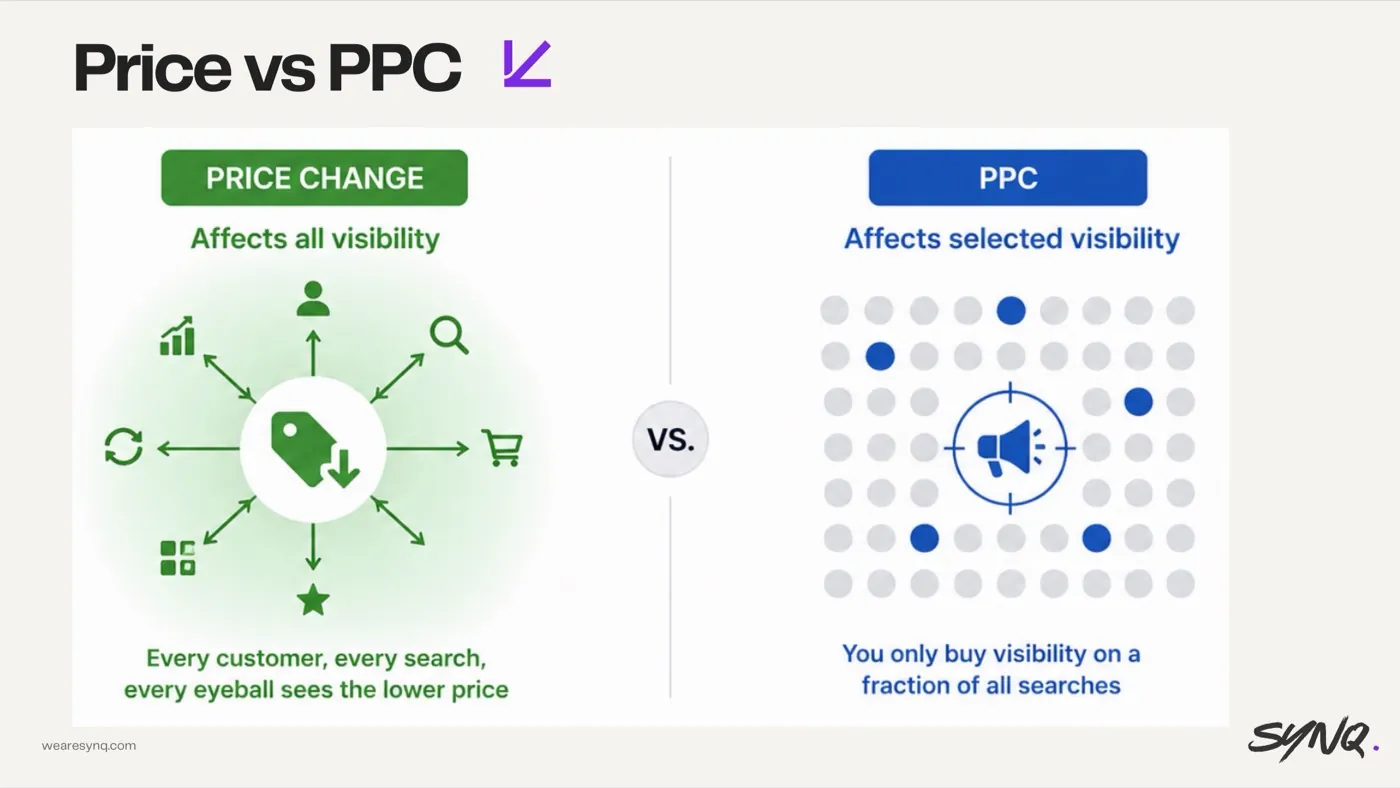
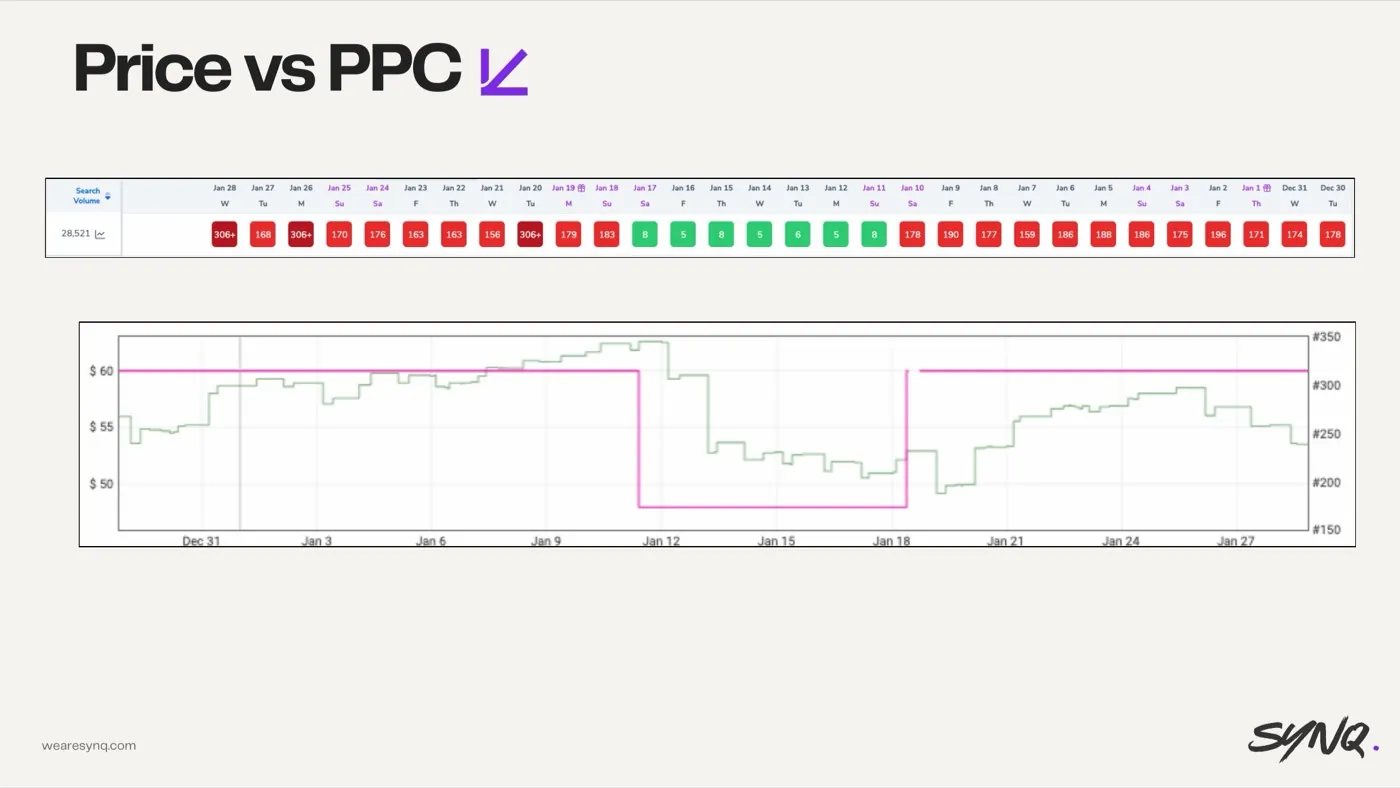
Most “PPC problems” are pricing problems in disguise. Price moves conversion everywhere; bids only move visibility somewhere.
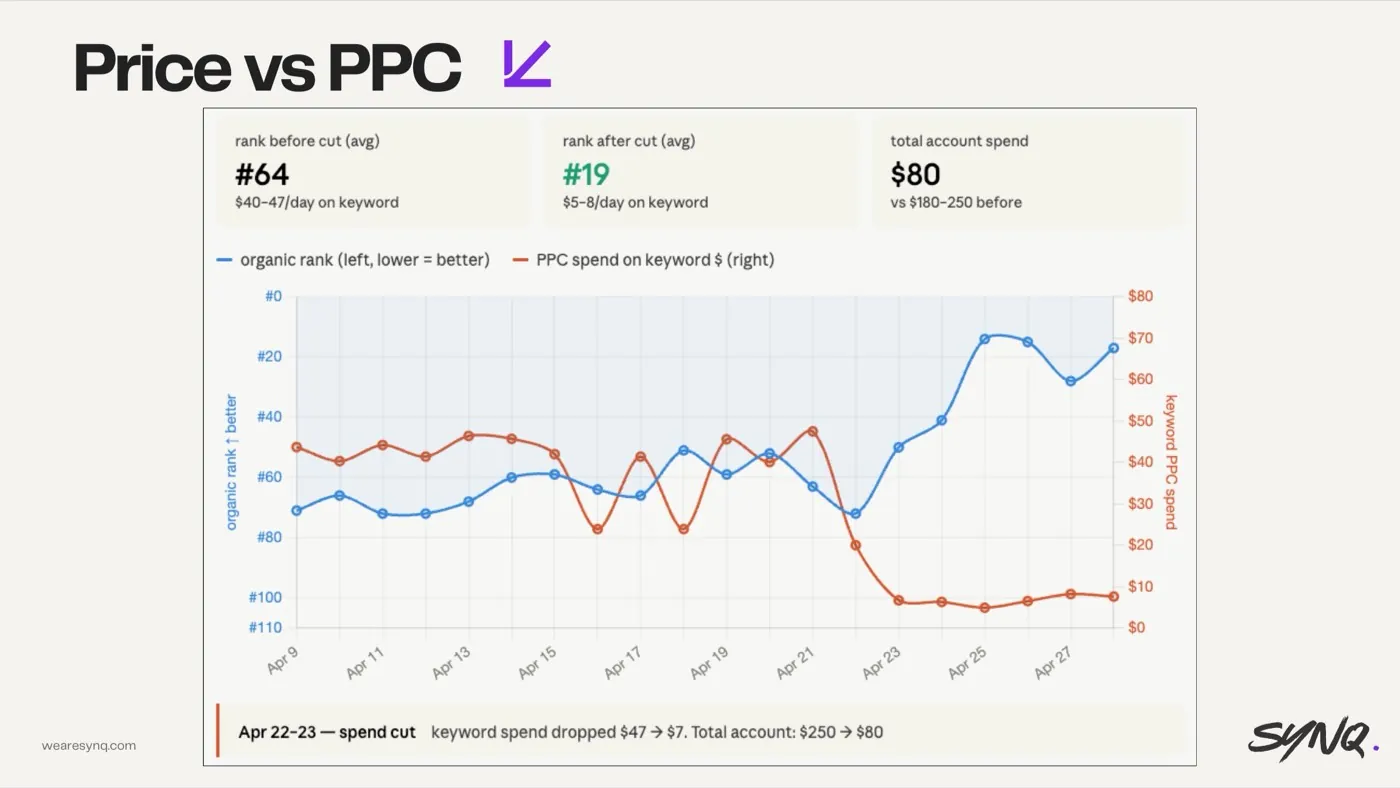
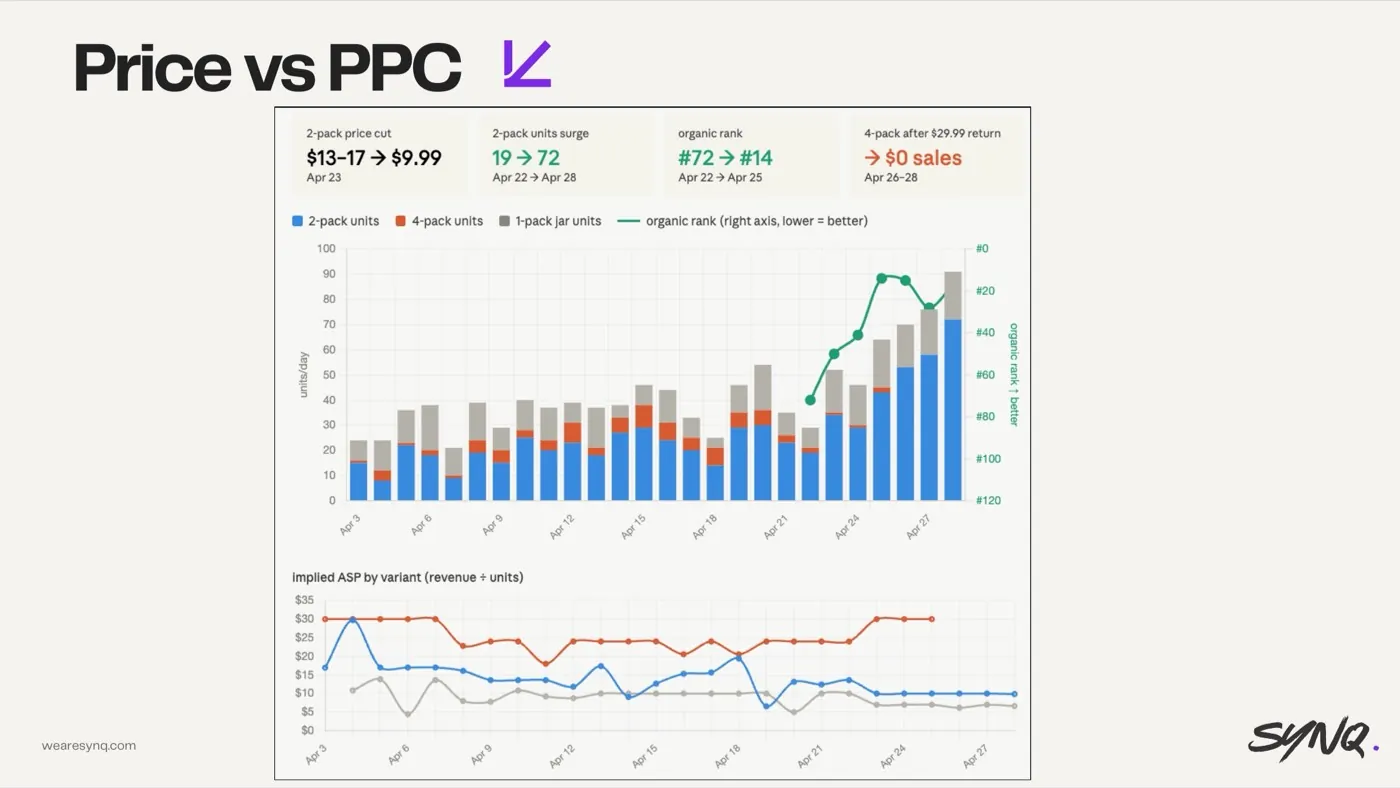
A price change moves your conversion rate across every surface your product appears on — organic and paid alike. A bid change only moves visibility, and only in the placements you are actively bidding on. That asymmetry is why pricing is the single most powerful lever on PPC profitability, and why it should be the first thing you check when ACOS climbs.
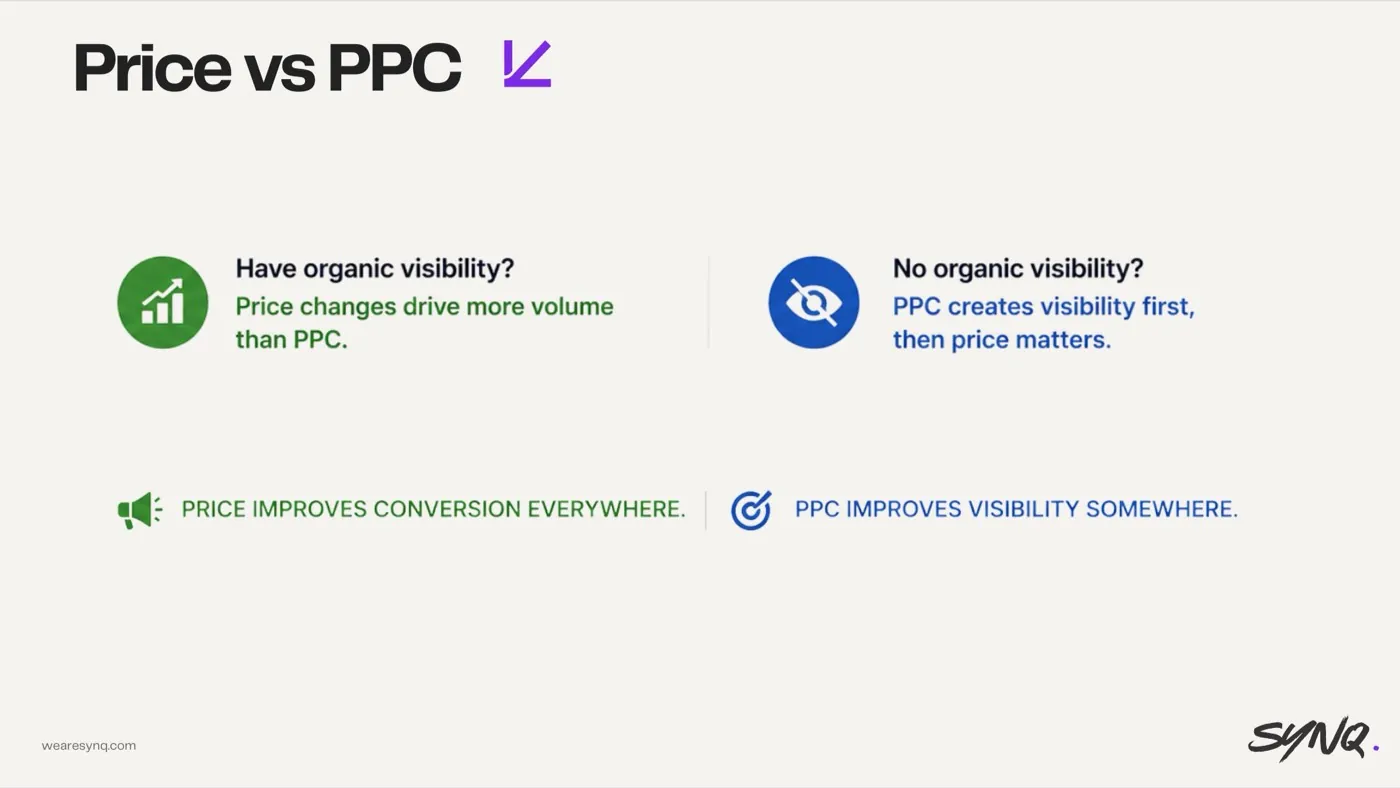
- If you already have organic visibility: a price change usually drives more incremental volume than pushing bids, because it lifts conversion on the traffic you are already winning for free.
- If you have no organic visibility: PPC has to create the visibility first — and then your price decides whether those hard-won clicks actually convert.
Price improves conversion everywhere. PPC improves visibility somewhere. Before you raise bids to rescue a high ACOS, confirm your price isn't the real constraint.
Advertising the wrong child ASIN
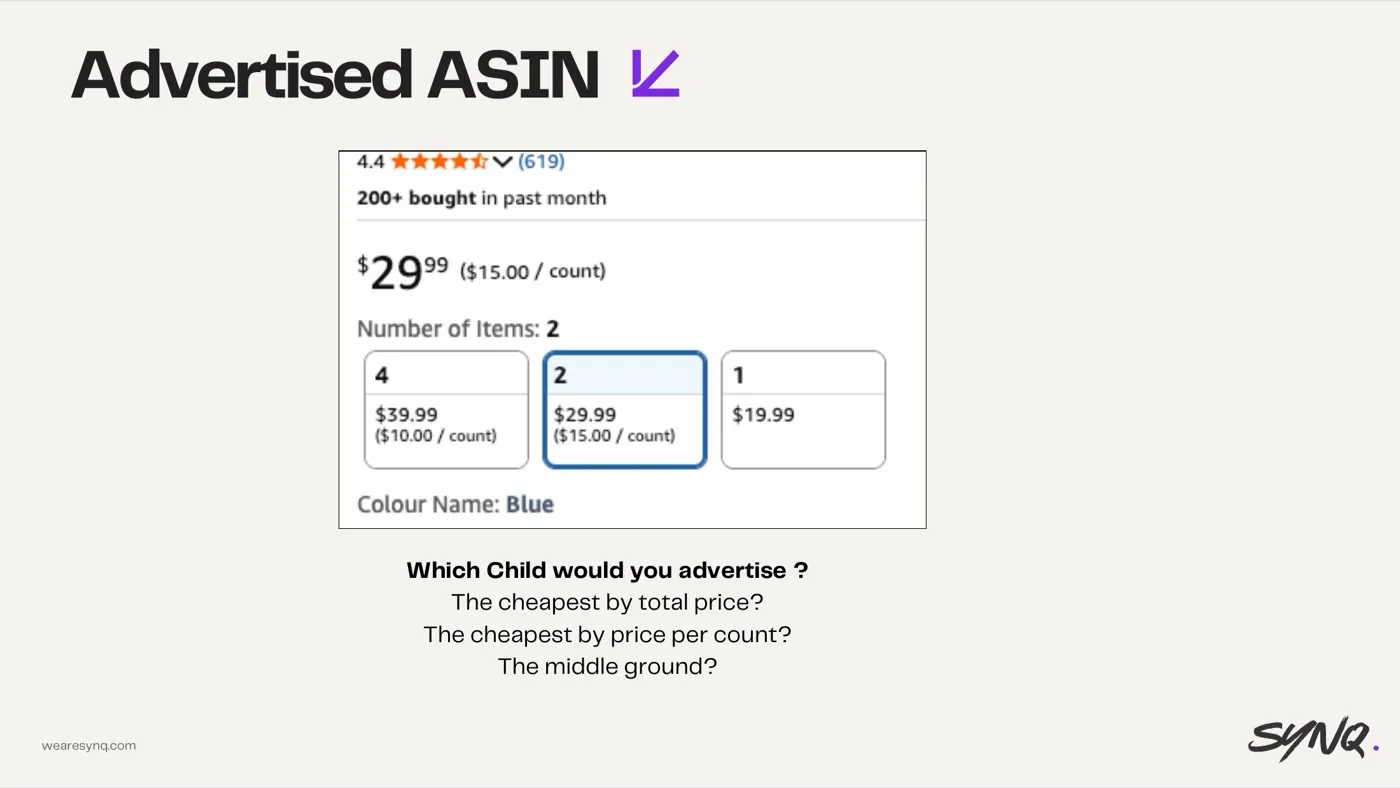
Inside a variation family, the child you advertise quietly decides your ACOS, your profit, and your organic rank.
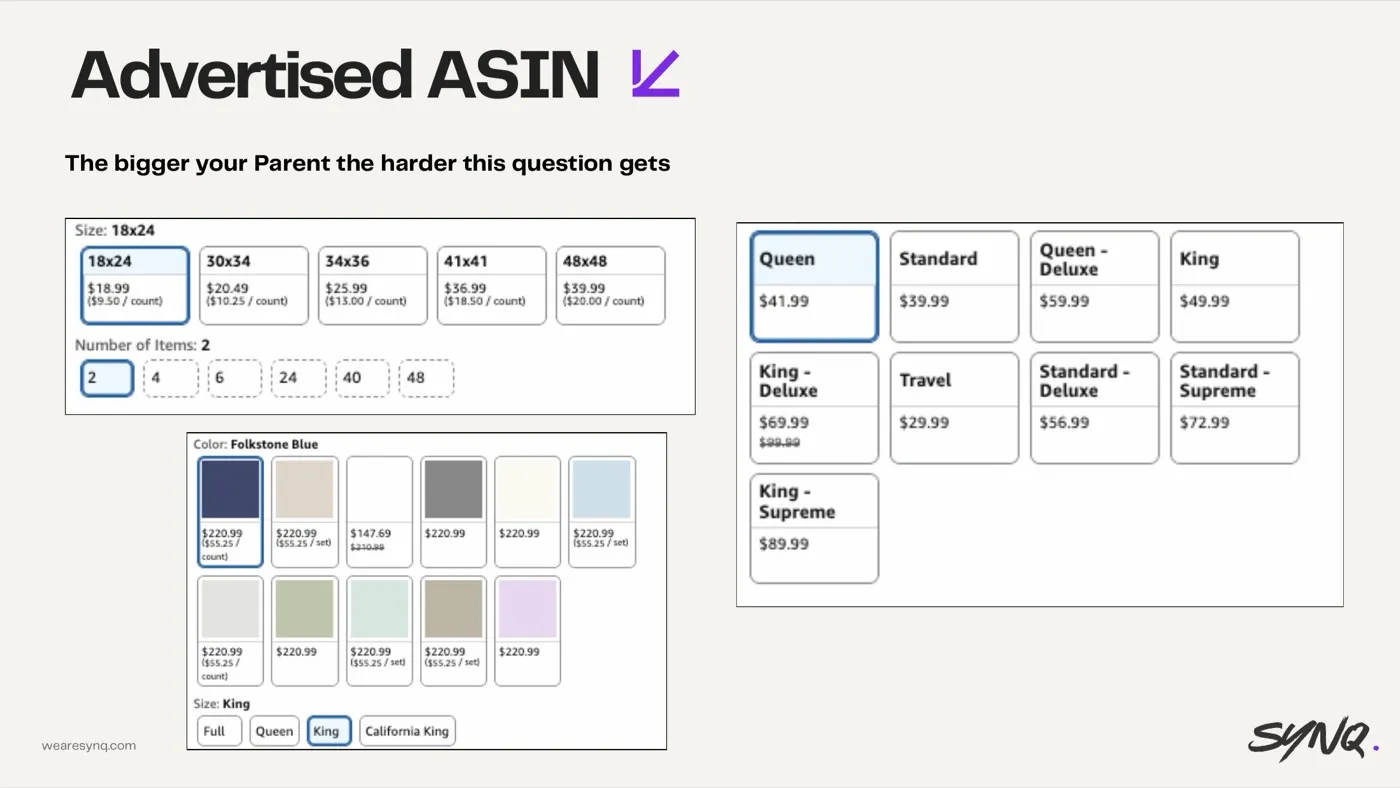
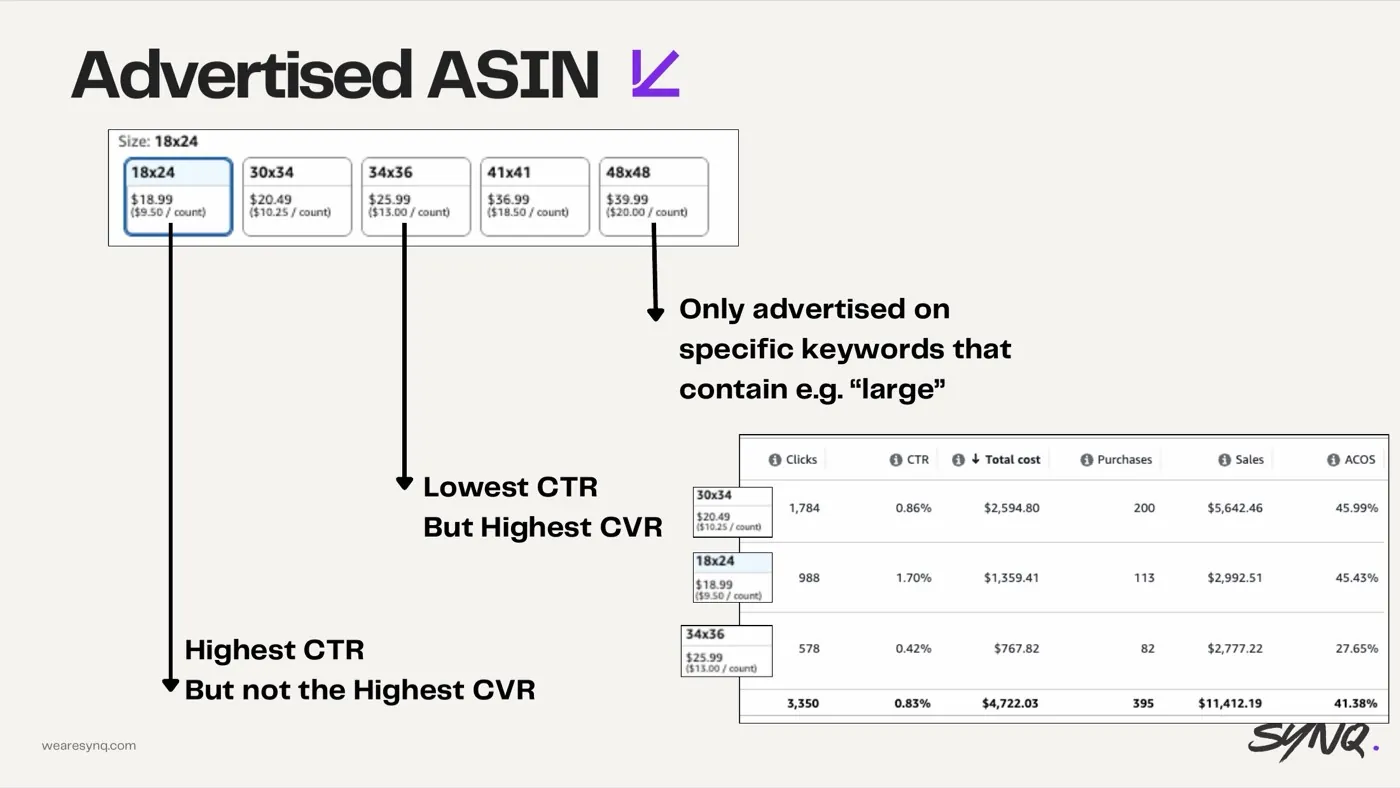
Which child do you advertise — the cheapest by total price, the cheapest by price-per-count, or the middle ground? Each one sends a different shopper a different value signal, and the bigger your parent grows, the harder the question gets. A cheaper child can win the click (high CTR) yet convert worse (low CVR), or convert best only on a narrow slice of keywords — for example searches that contain “large”.
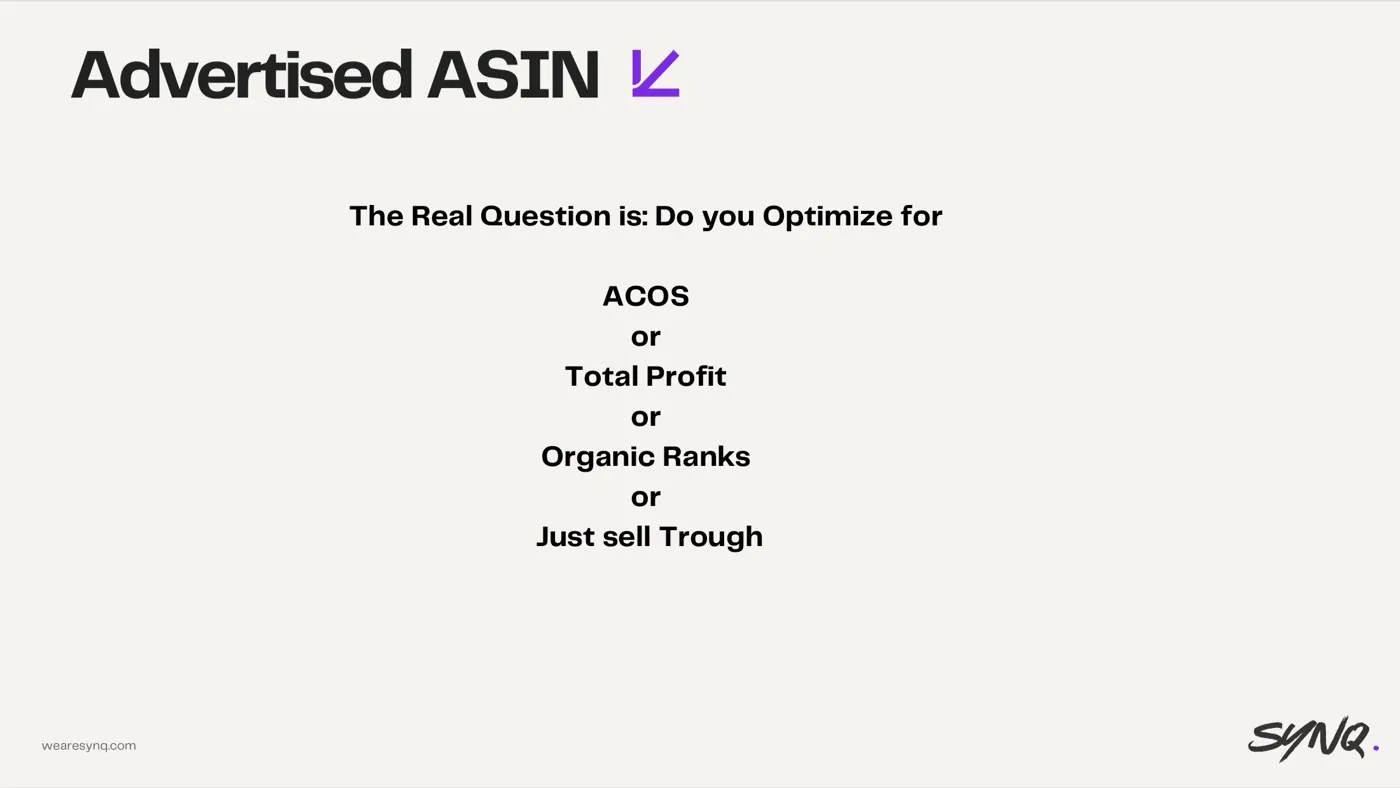
The real question is not “which child is cheapest”, it is what you are optimizing for: ACOS, total profit, organic rank, or sell-through. The answer changes which child deserves the ad spend.
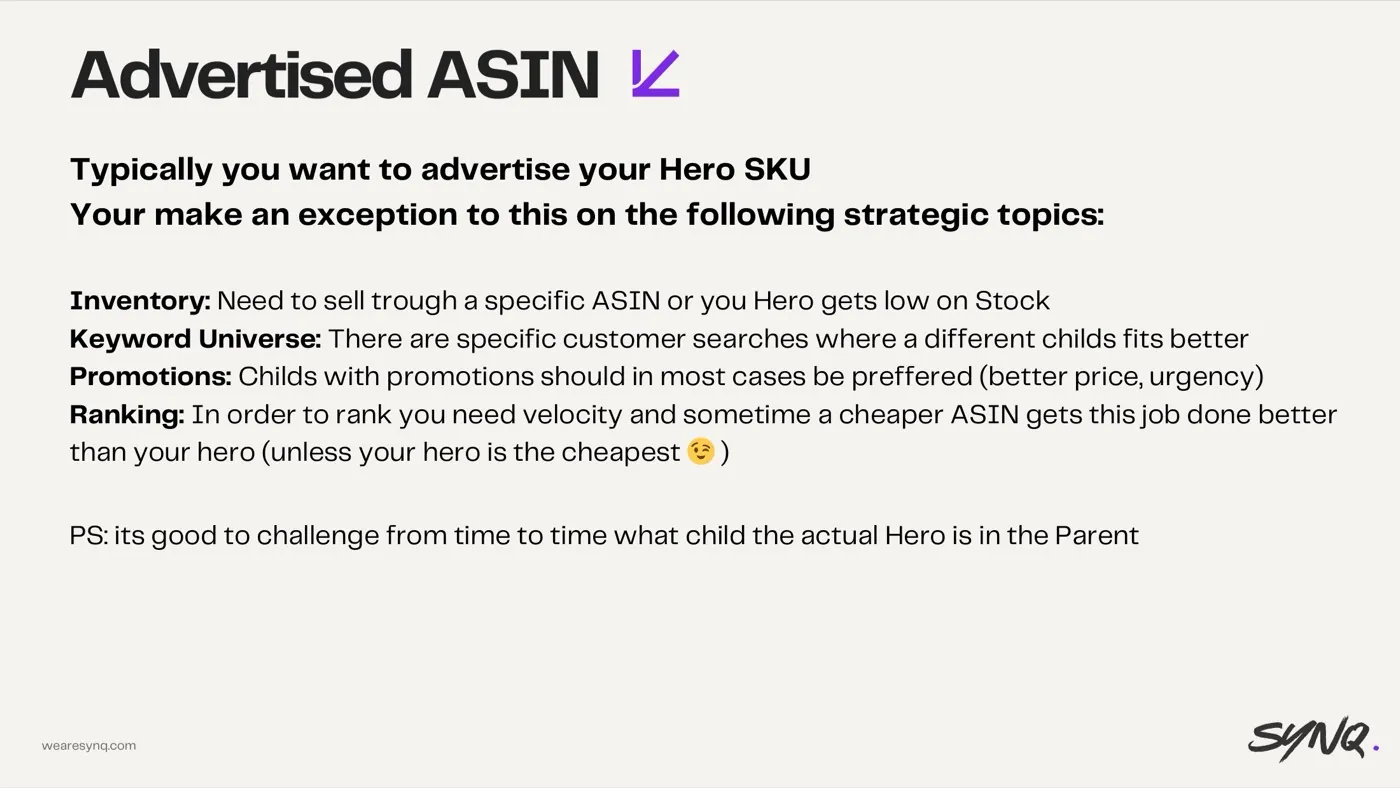
- Default: advertise your Hero SKU — the child that carries the family.
- Inventory: make an exception when you need to sell through a specific ASIN, or your hero is running low on stock.
- Keyword universe: some customer searches simply fit a different child better.
- Promotions: a child with a coupon or deal usually wins on price and urgency.
- Ranking: to rank you need velocity, and a cheaper ASIN sometimes earns it faster than the hero.
Challenge from time to time which child is actually the hero in the parent — it changes more often than you think.


Overpaying on branded CPCs
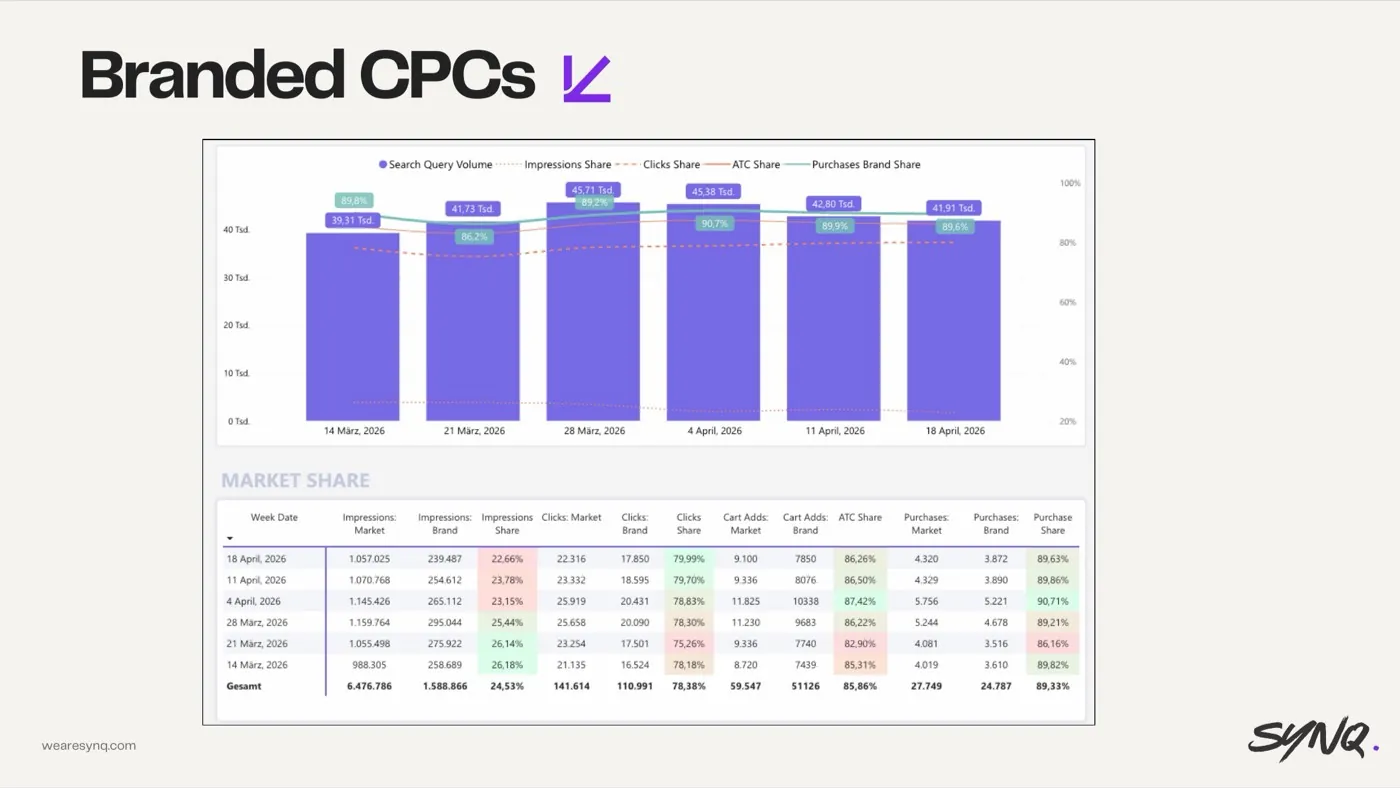
You usually already own the top organic slot for your own brand — so don't pay a premium to click your own name.
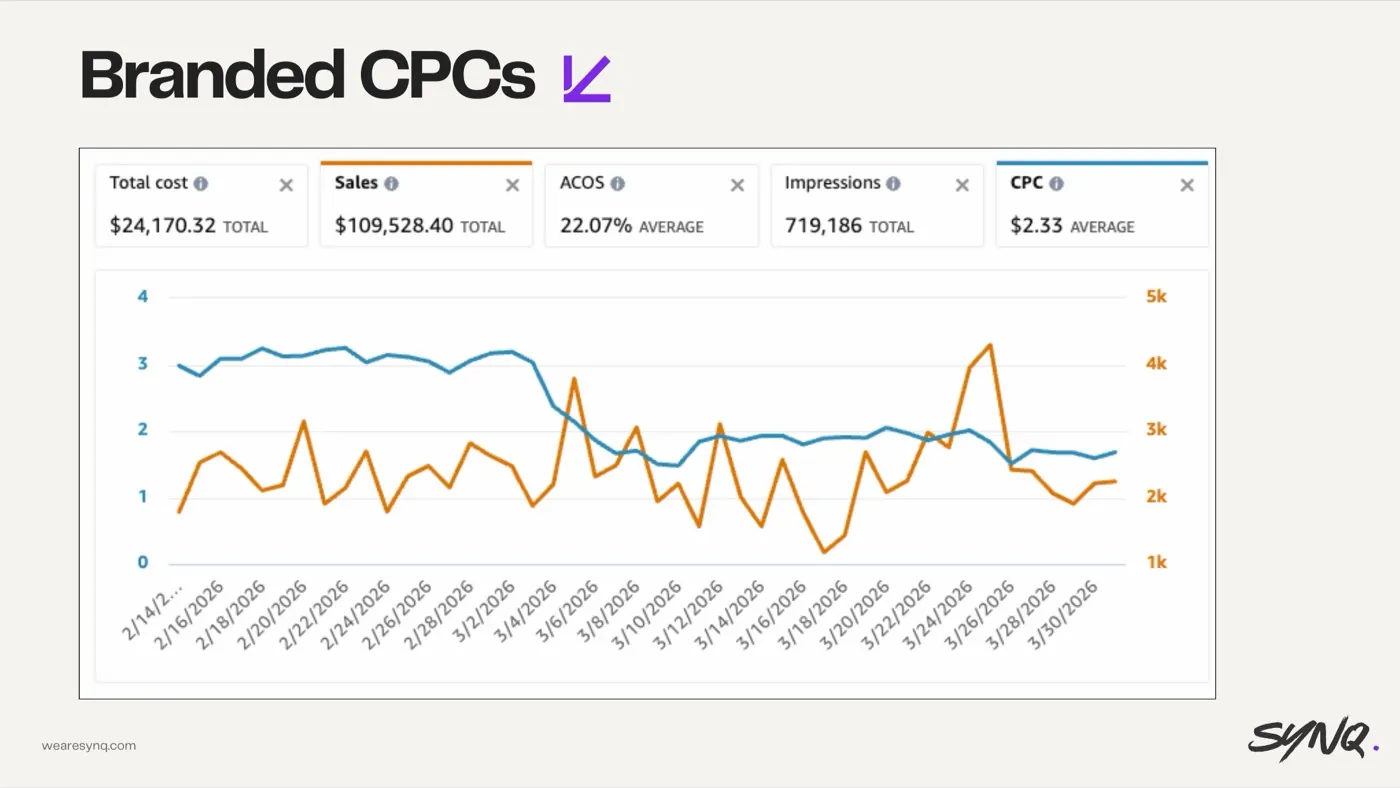
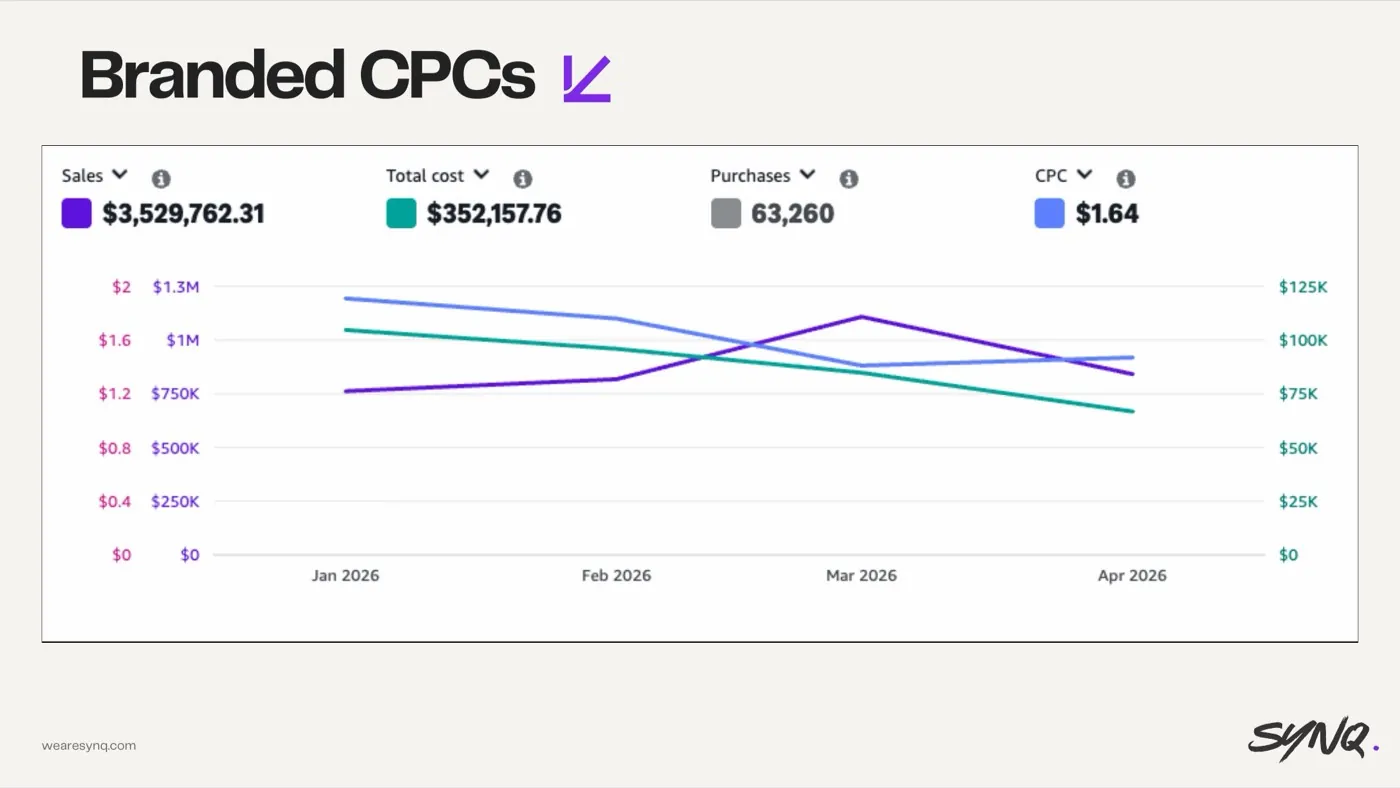
On branded search you are often the #1 organic result already. Bidding aggressively on your own brand mostly buys clicks you would have won for free, inflating your average CPC without adding incremental sales. It feels productive because the ACOS on brand terms looks fantastic — but a great ACOS on traffic you already owned is not the same as incremental revenue.
The data tells the story: as branded CPC fell from roughly $3.00 toward $1.70, sales held steady. The extra spend at the higher CPC was not buying additional orders — it was cannibalizing organic sales at a premium.
Keep branded bids defensive: high enough to hold the placement against competitors and protect the search page, low enough that you aren't paying to cannibalize your own organic sales.


Misusing B2B modifiers
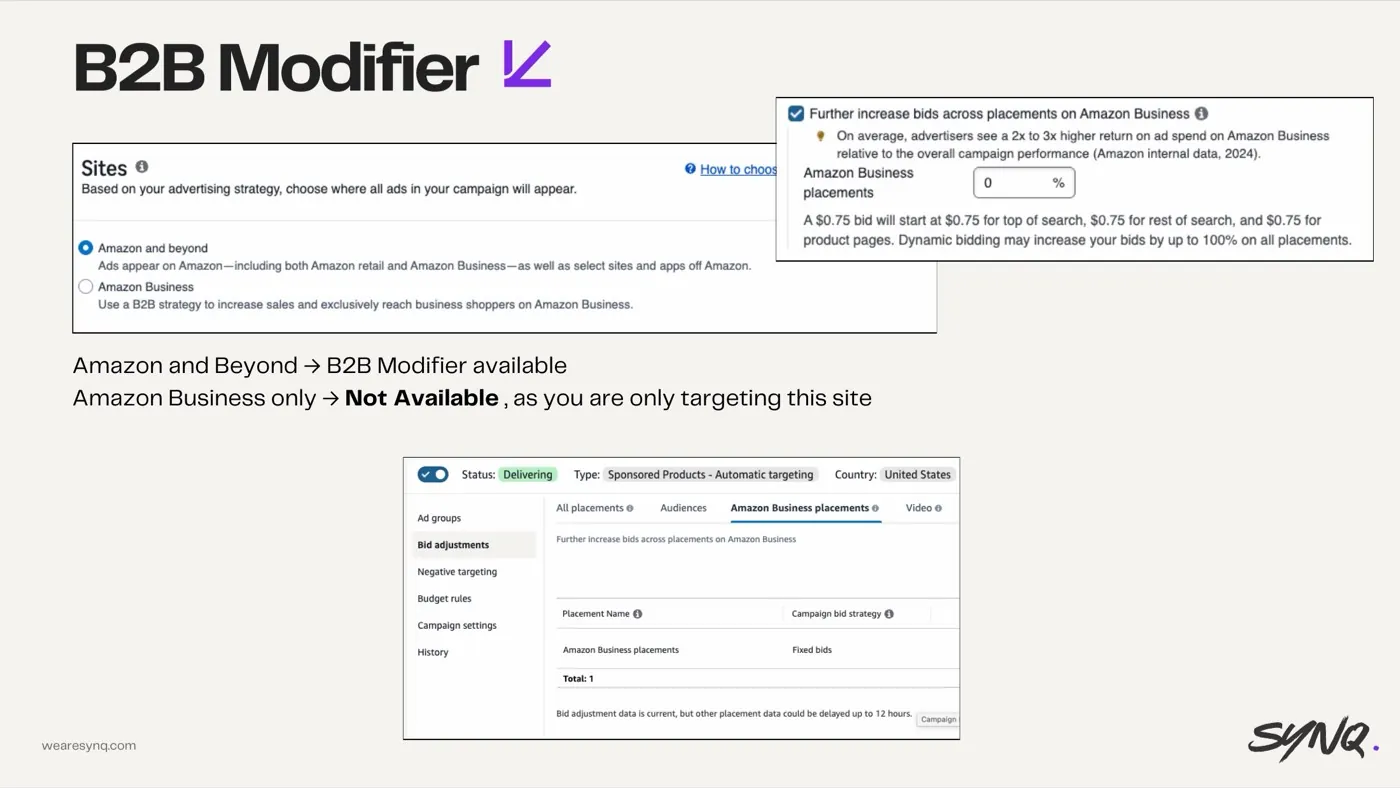
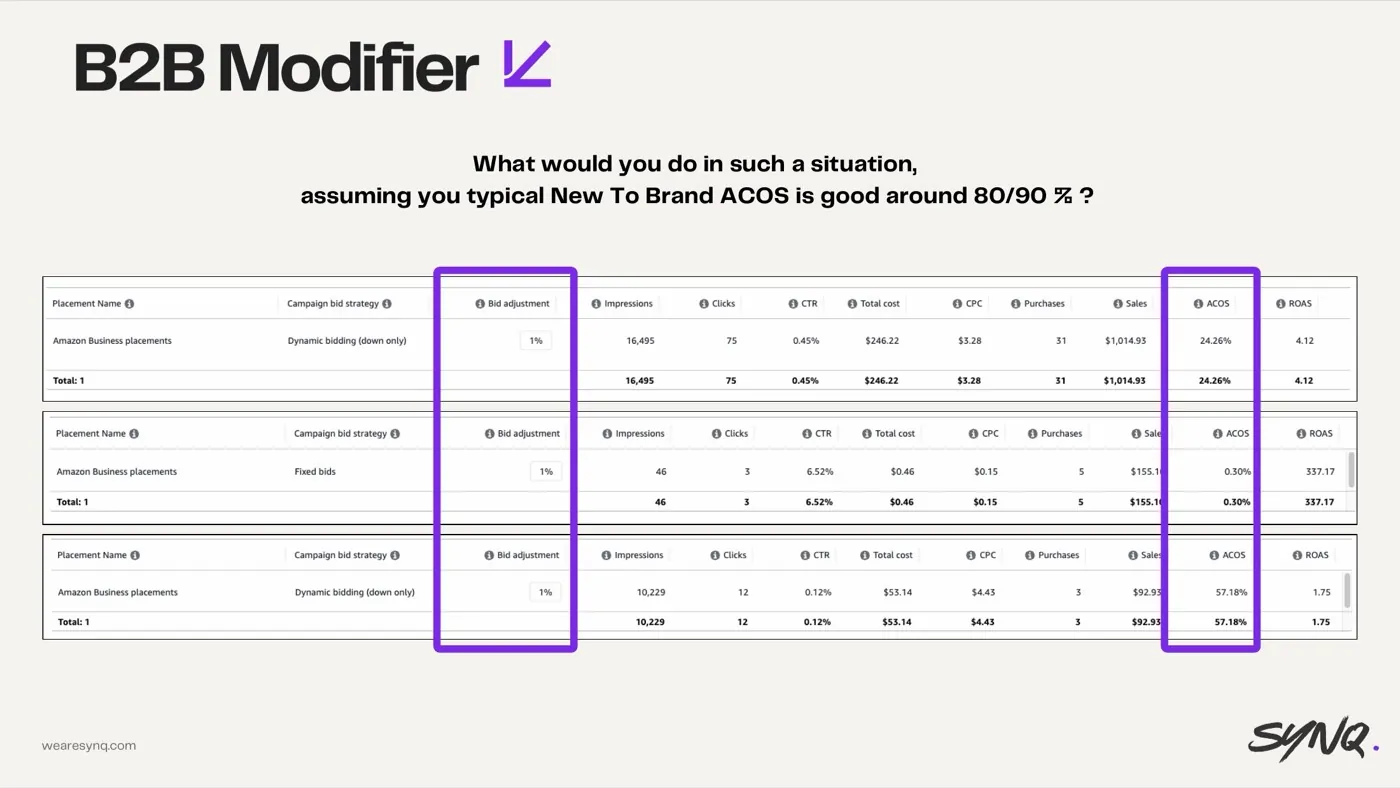
The Amazon Business modifier can shift organic B2B sales into the paid column without adding a single incremental order.
- Available: when your campaign targets “Amazon and Beyond”, the B2B modifier can be applied.
- Not available: when you target Amazon Business only — you are already exclusively on that site, so there is nothing to modify.
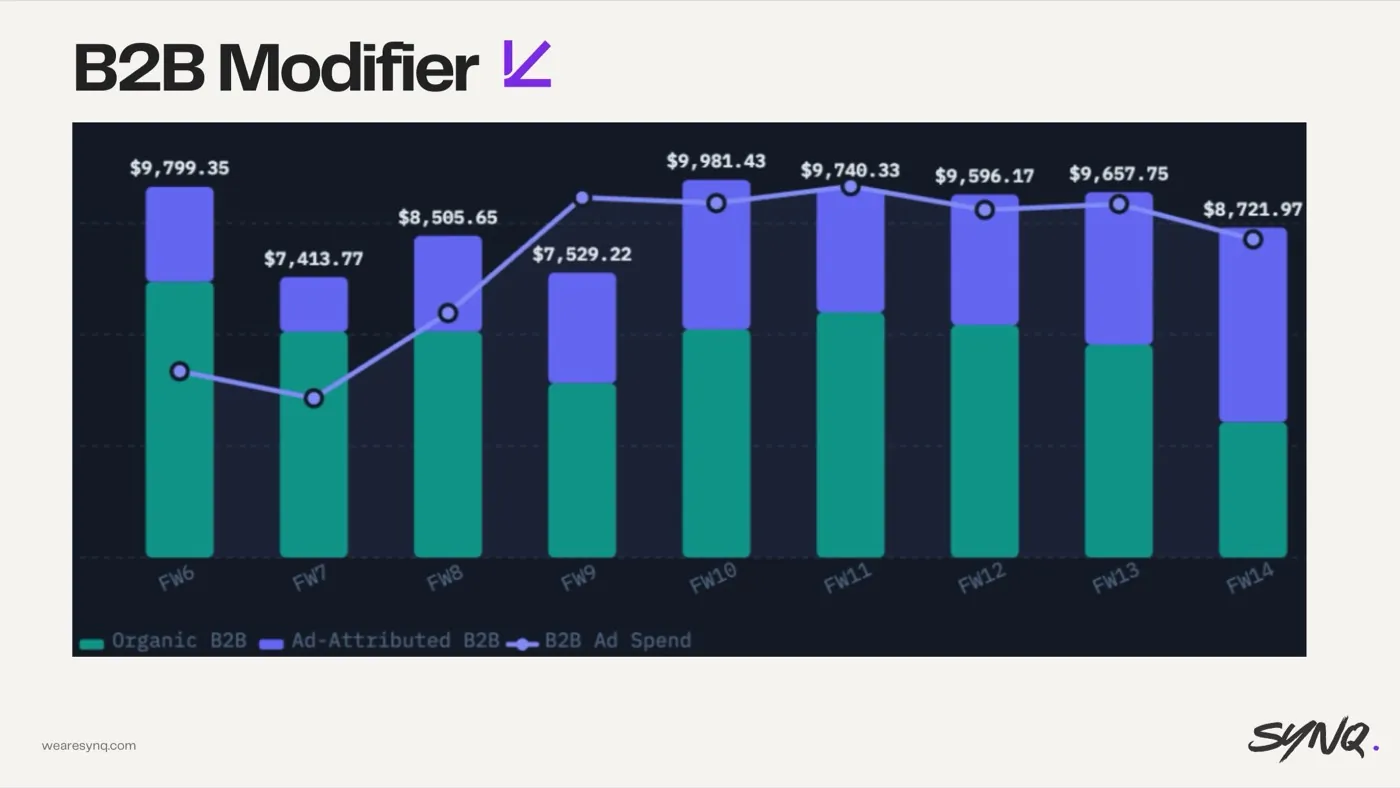
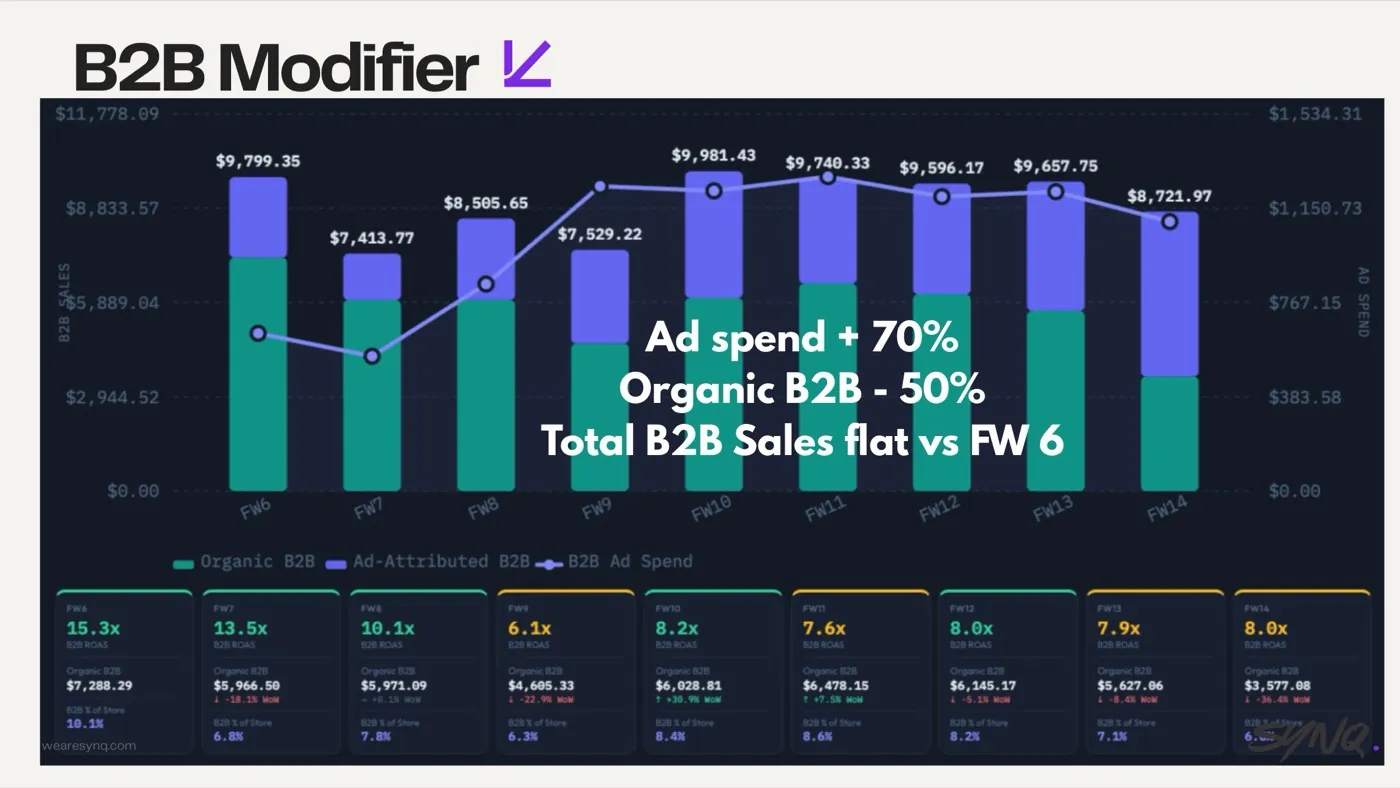
Here is the trap. In a real example, applying the B2B modifier drove ad spend +70% and organic B2B sales −50%, while total B2B sales stayed flat versus the prior week. You paid more to move sales from the organic column into the paid column — zero growth, worse profit. The modifier's own reported ACOS looked fine because it only sees the paid side.
Judge B2B modifiers against total B2B sales and click-based economics, not the flattering ACOS the modifier reports. If incremental sales don't move, the modifier is burning money.


Stacking placement modifiers blindly
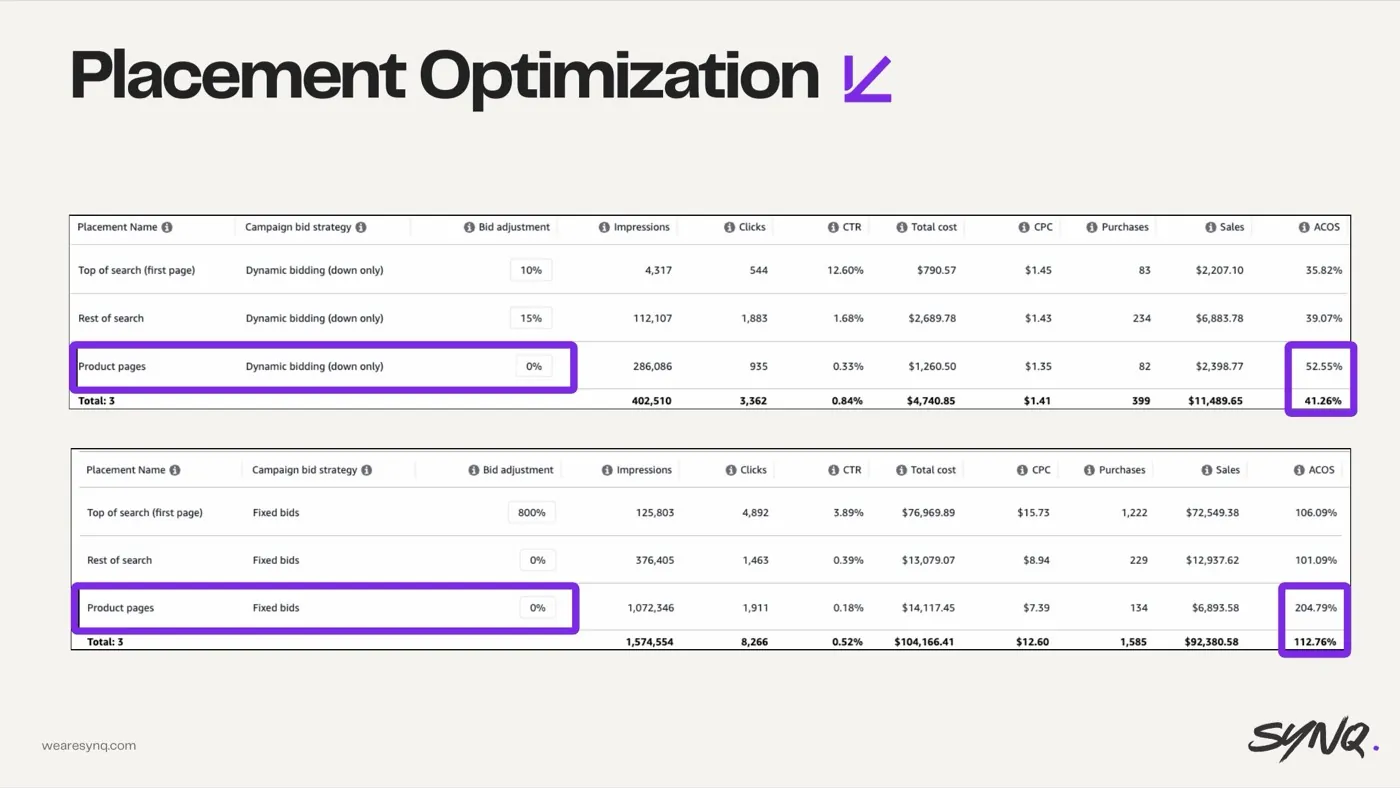
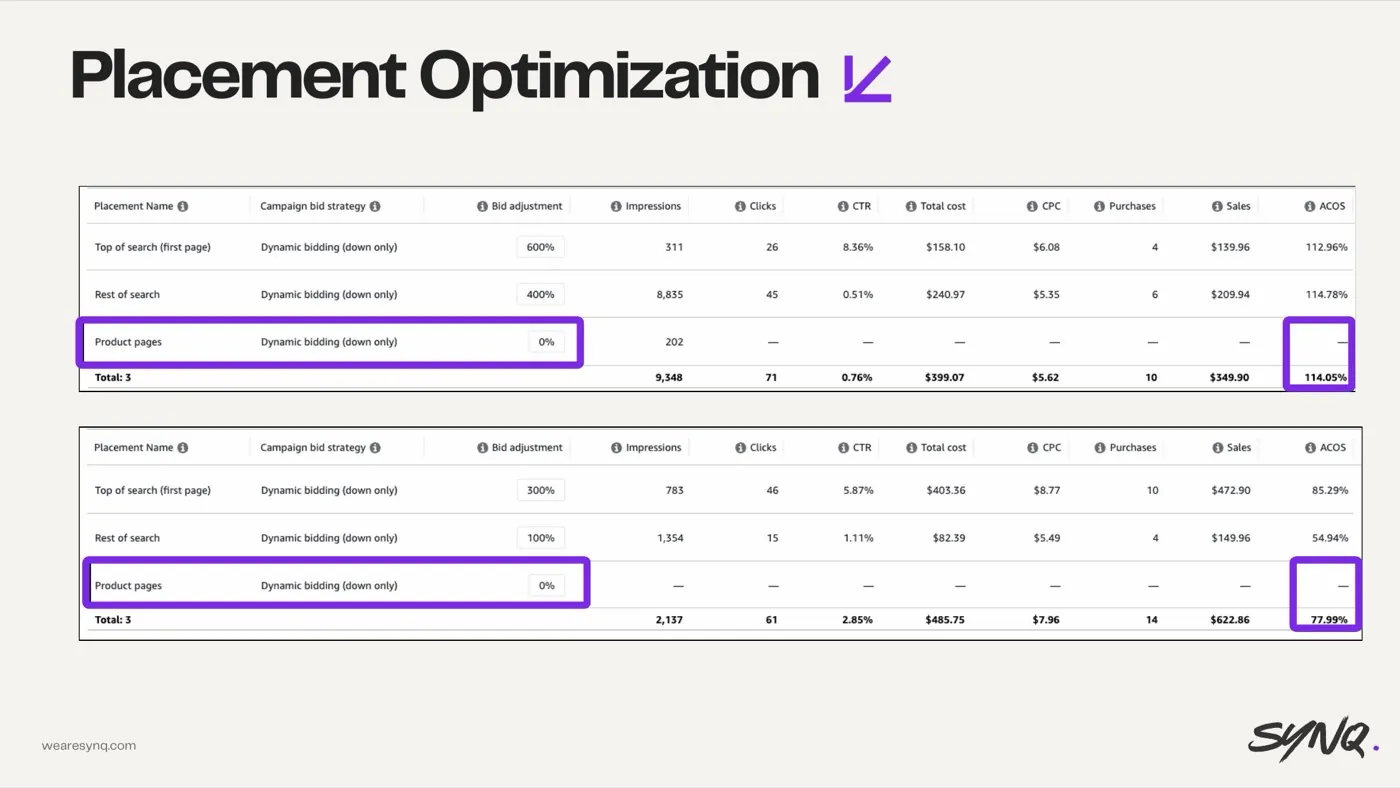
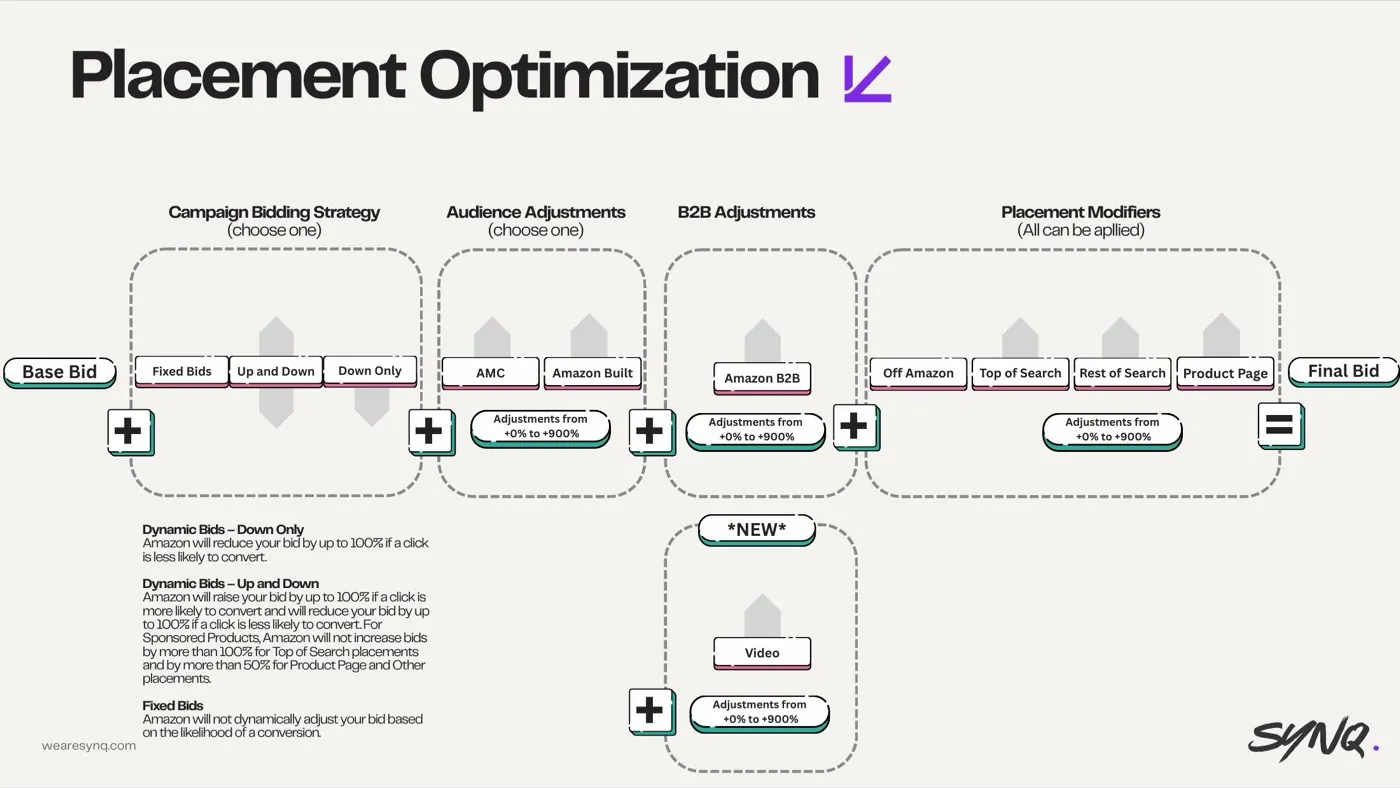
Your final bid is a stack of multipliers — and each layer can add up to +900% on top of the last.
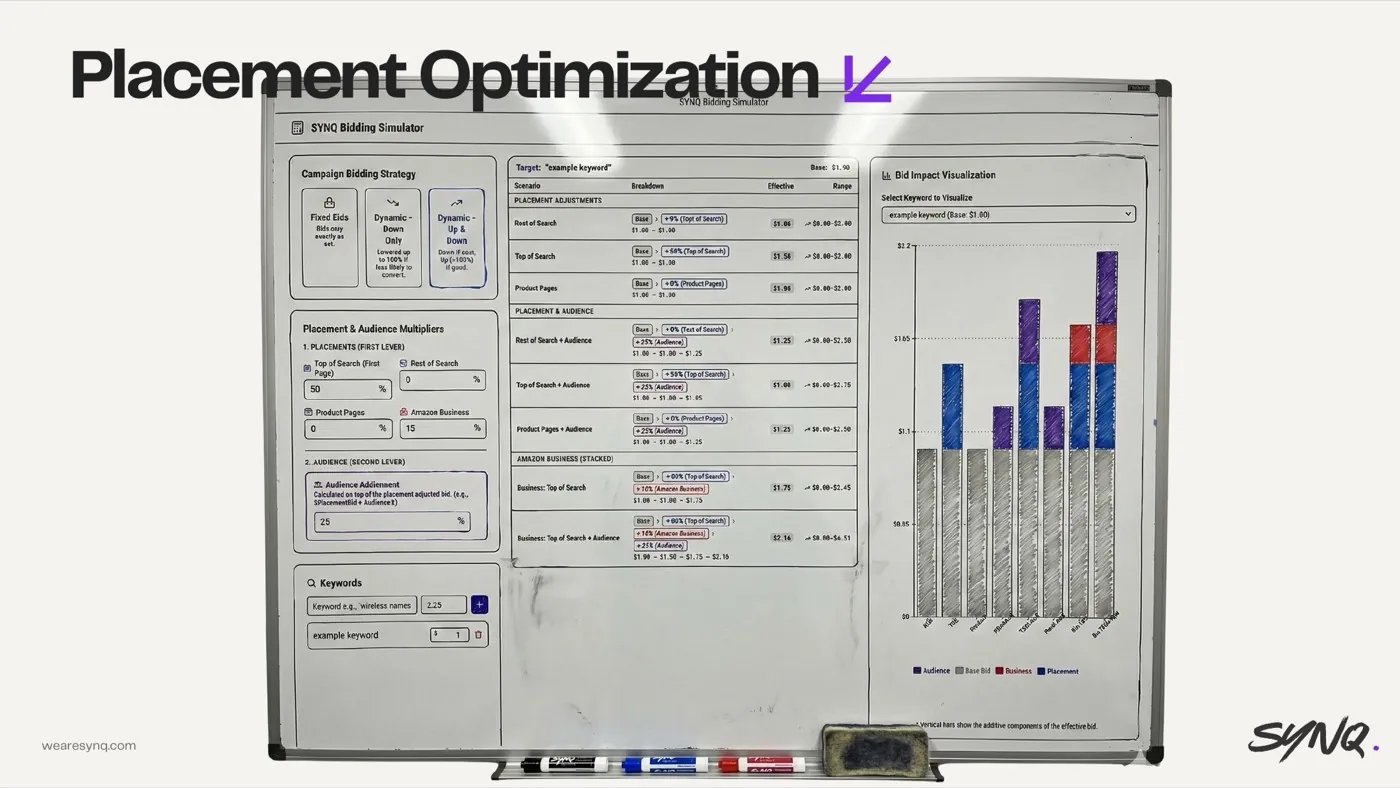
Final bid = Base bid + Campaign bidding strategy + Audience adjustment + B2B adjustment + Placement modifier. You choose the bidding strategy once (Fixed, Dynamic Up & Down, or Dynamic Down Only). The audience, B2B, and placement adjustments each range from 0% to 900%, and they compound on top of the placement-adjusted bid — not on the base bid — so the effective cost grows much faster than it looks.
- Dynamic — Down Only: Amazon reduces your bid by up to 100% when a click is less likely to convert, and never raises it.
- Dynamic — Up & Down: Amazon raises your bid up to 100% when a click is more likely to convert (capped at +100% for Top of Search and +50% for product pages on Sponsored Products) and lowers it up to 100% when it isn't.
- Fixed Bids: Amazon does not adjust your bid based on conversion likelihood at all.
Because every layer multiplies, a modest base bid can quietly become a very large effective bid at Top of Search for a B2B audience. Set placement modifiers deliberately and model the full stack before you launch.


Spending on VCPM campaigns
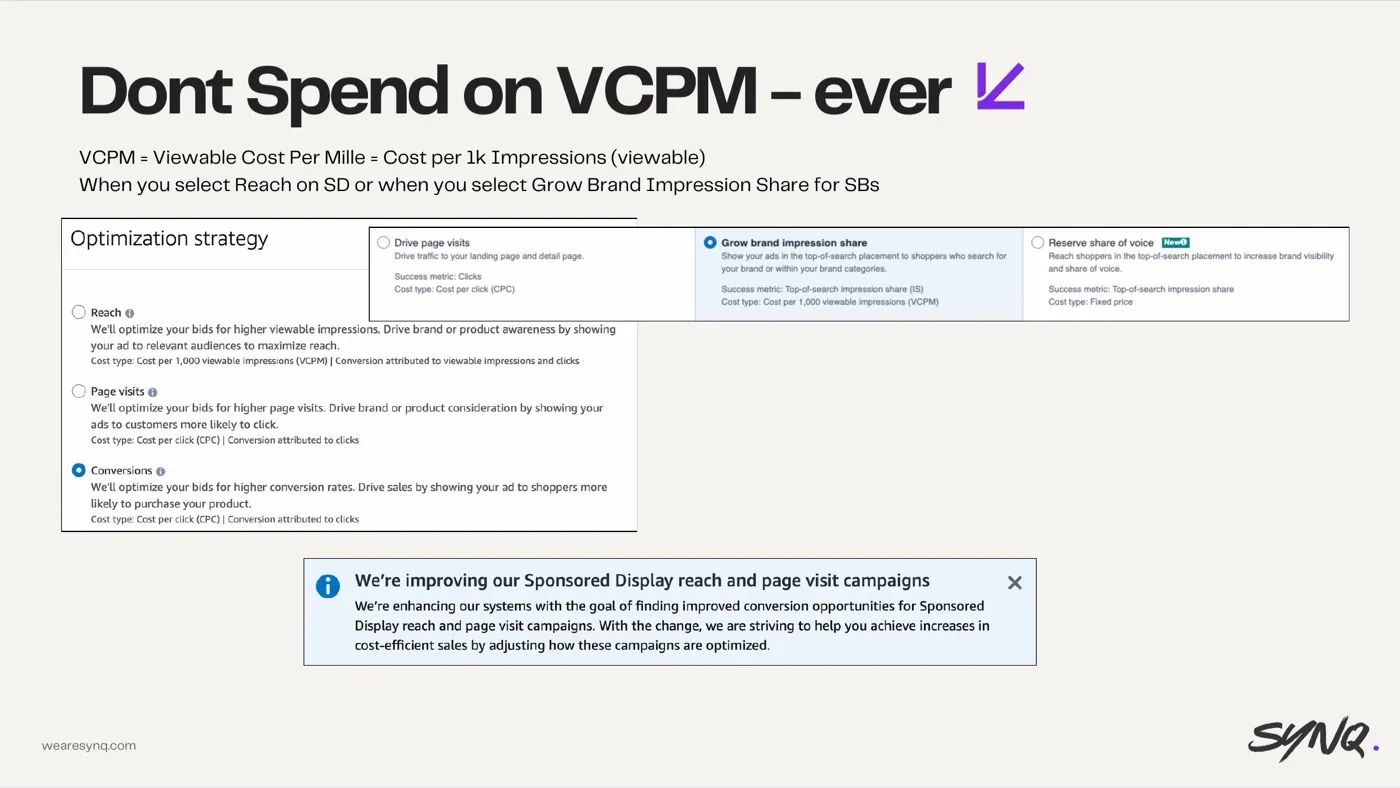
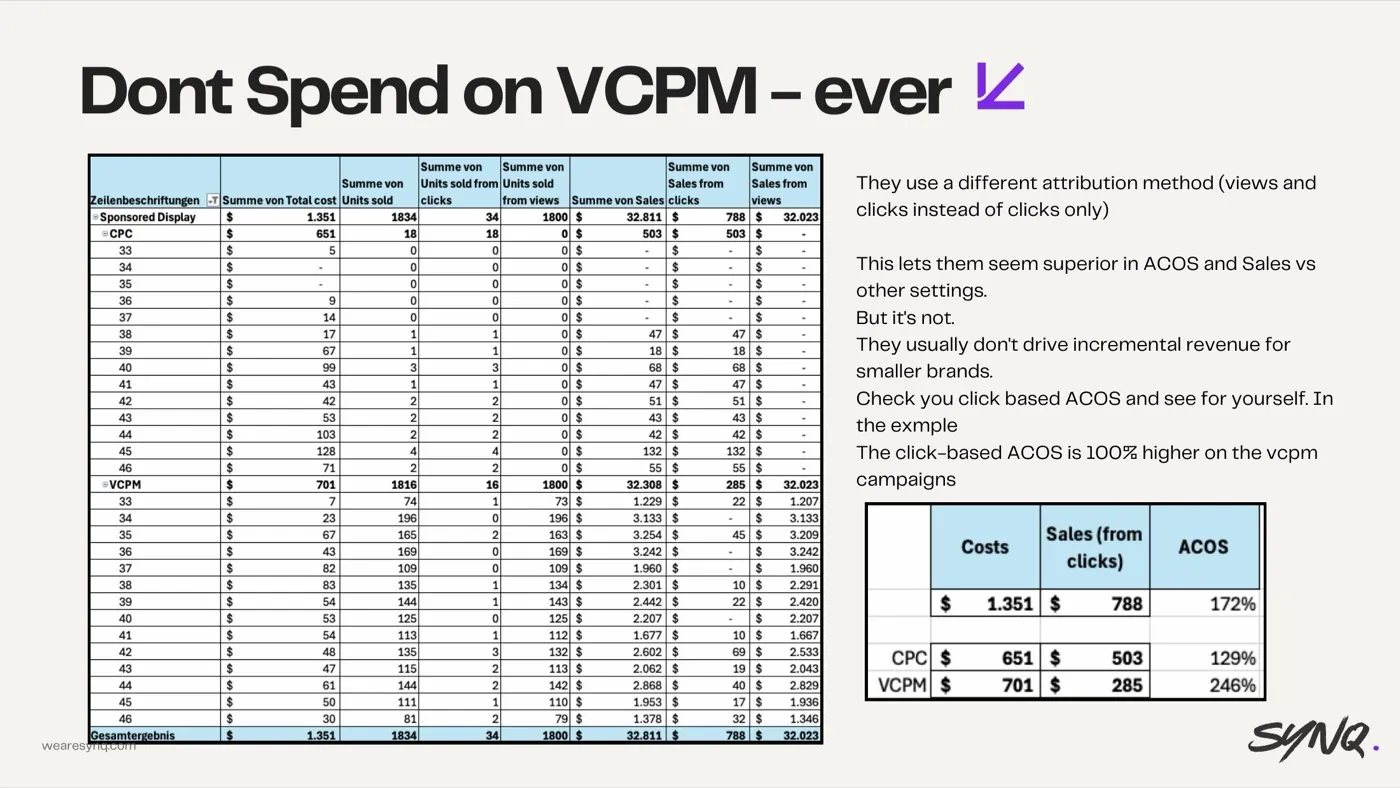
Don't spend on VCPM — almost ever. The metrics that make it look good are the metrics designed to make it look good.
VCPM = Viewable Cost Per Mille = cost per 1,000 viewable impressions. You opt into it without quite realizing it whenever you pick “Reach” on Sponsored Display, or “Grow Brand Impression Share” on Sponsored Brands.
VCPM campaigns use a different attribution model — views and clicks, instead of clicks only. That makes their reported ACOS and sales look superior to your other settings. But it usually isn't: for smaller brands these campaigns rarely drive incremental revenue. They simply claim credit for sales that would have happened anyway.
Recompute click-based ACOS before you trust a VCPM campaign. In the example, the click-based ACOS was 100% higher than the view-based number suggested. Judge VCPM on clicks and incrementality, not on the flattering view-based figures.


Mismanaging Sponsored Prompts
As Rufus and AI shopping prompts roll out, a brand-new placement appears — and with it, a brand-new way to overspend.
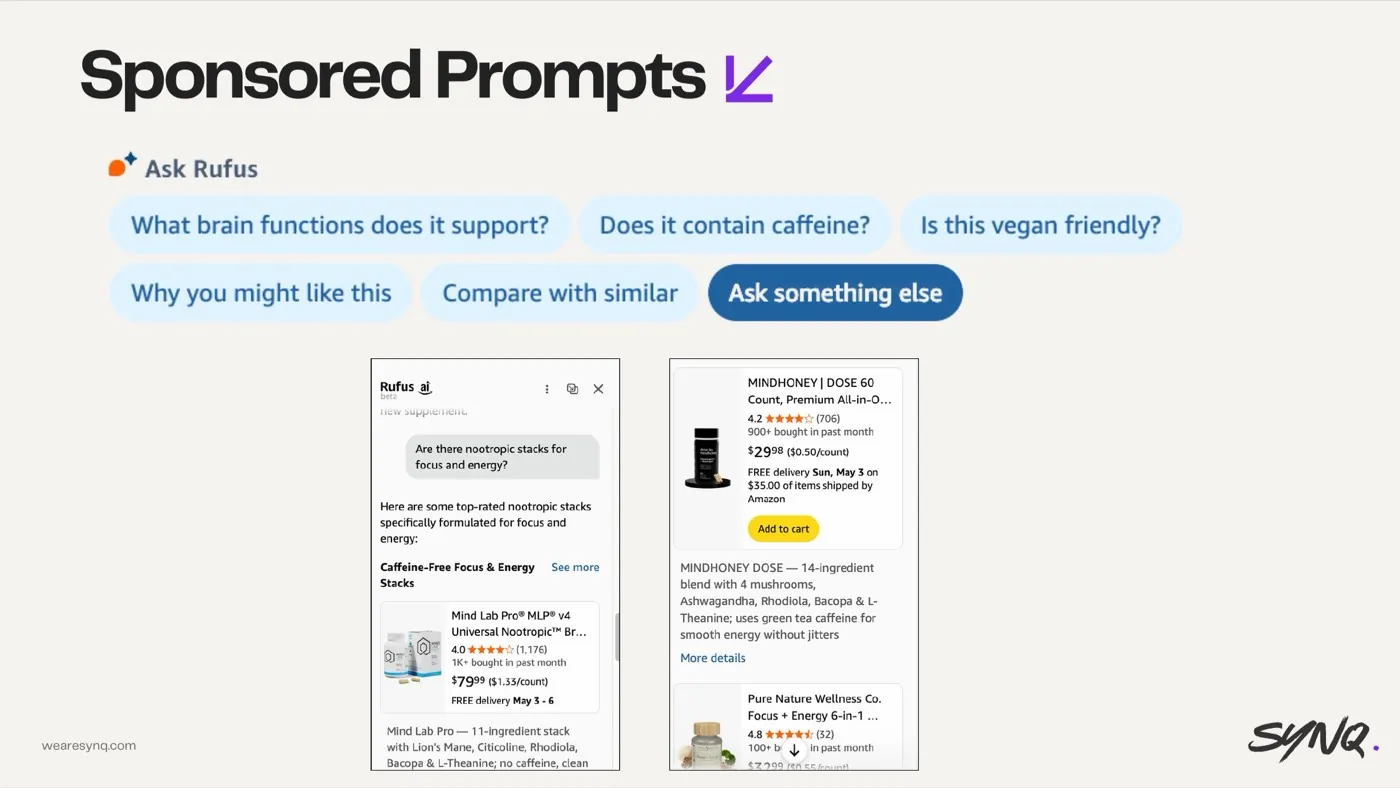
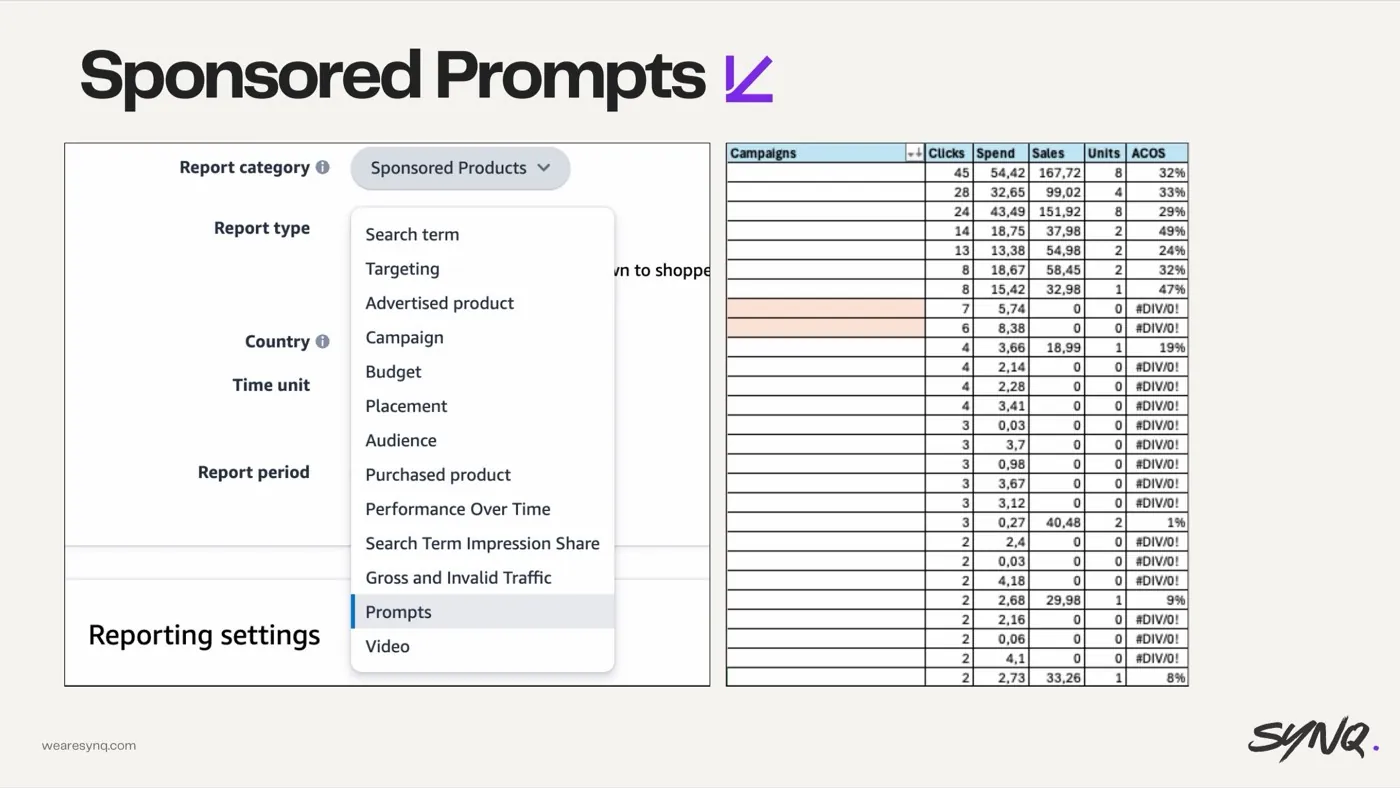
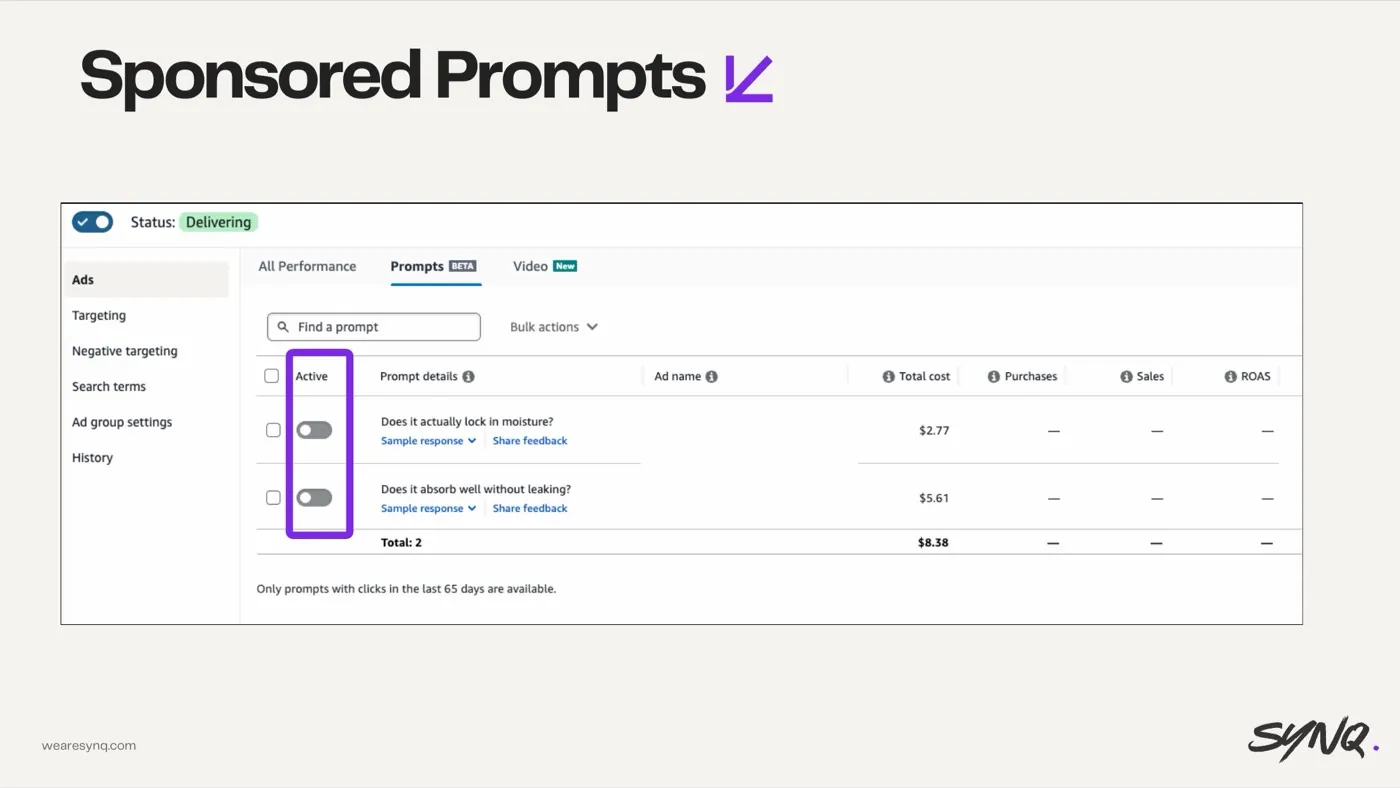
Sponsored Prompts surface your product inside Amazon's AI assistant (Rufus) when a shopper asks a question like “are there nootropic stacks for focus and energy?”. The AI answer can now include sponsored product cards alongside the suggested follow-up prompts (“Does it contain caffeine?”, “Is this vegan friendly?”).
It is a genuinely new top-of-funnel surface, but the intent signals and attribution are still immature. Treat early budgets as a controlled test, watch click-based performance closely, and don't let a shiny new placement default you into spend you can't yet measure.


Leaking budget off Amazon
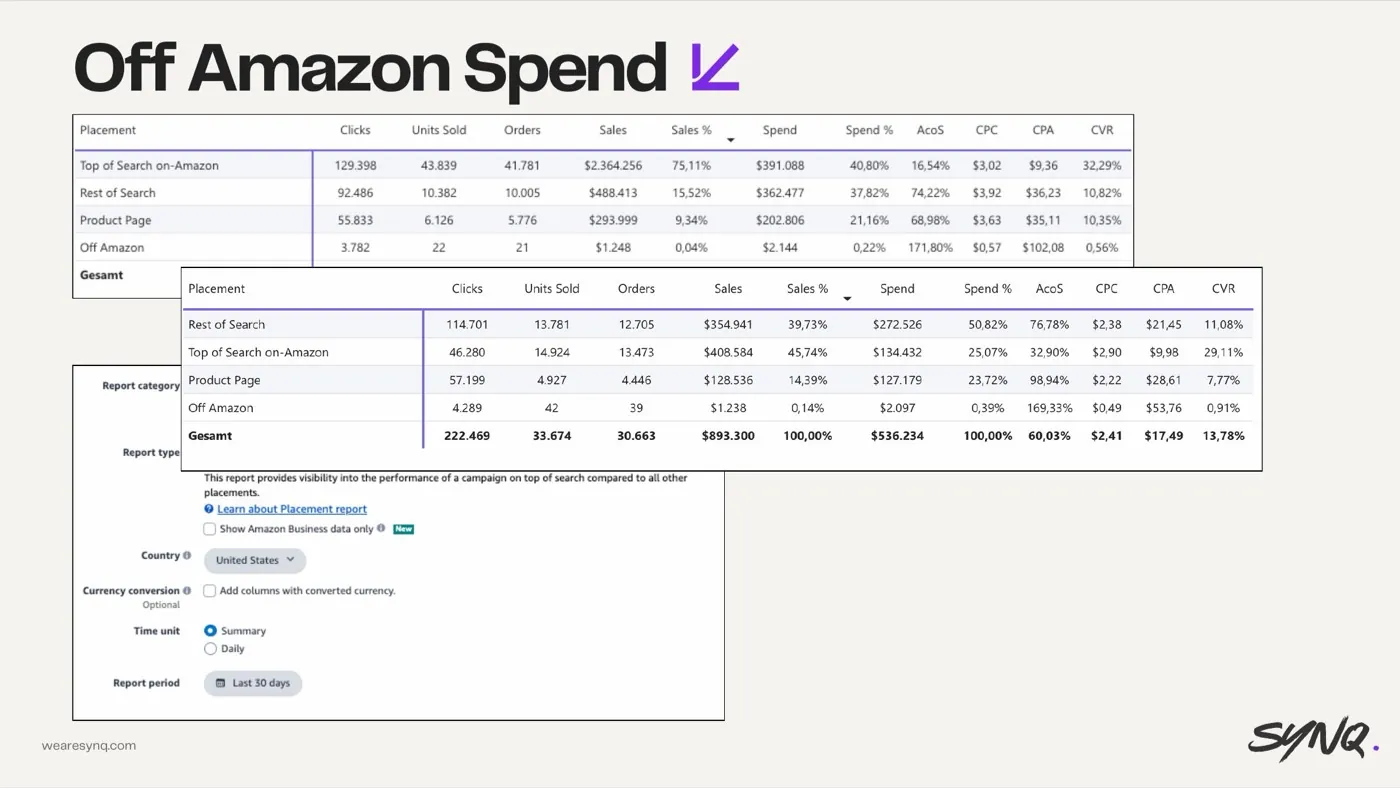
Off-Amazon placements can spray budget across low-intent inventory you never meant to buy.
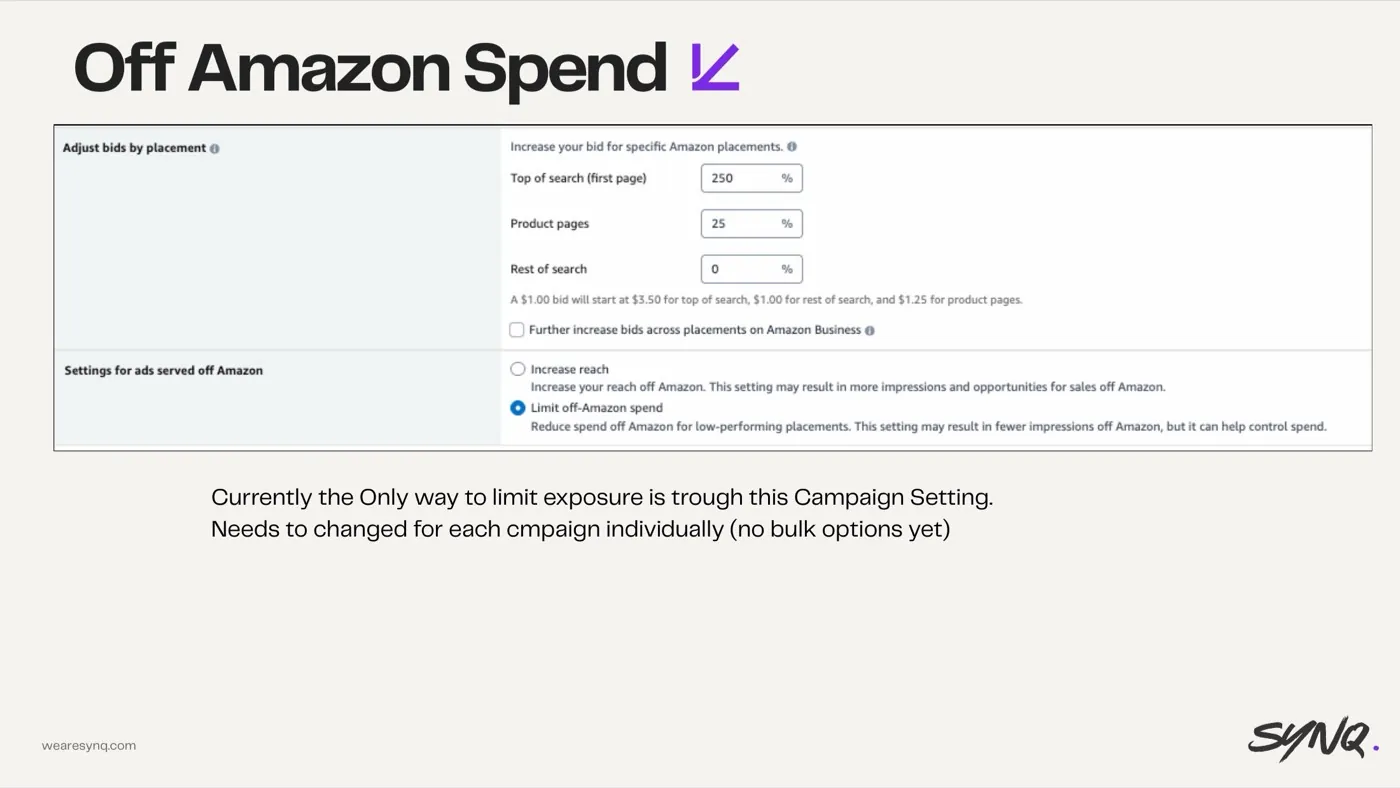
Several campaign types now extend off Amazon by default, pushing your ads onto third-party inventory across the web. Today the only way to limit that exposure is a per-campaign setting — and there is no bulk option yet, so on a large account it is dangerously easy to miss.
Audit each campaign's off-Amazon setting deliberately. If off-Amazon traffic isn't converting at acceptable click-based economics, turn the exposure down — one campaign at a time until Amazon ships a bulk control.


Opting into new features blindly
New ad features default to spending. Read the cost type before you opt in.
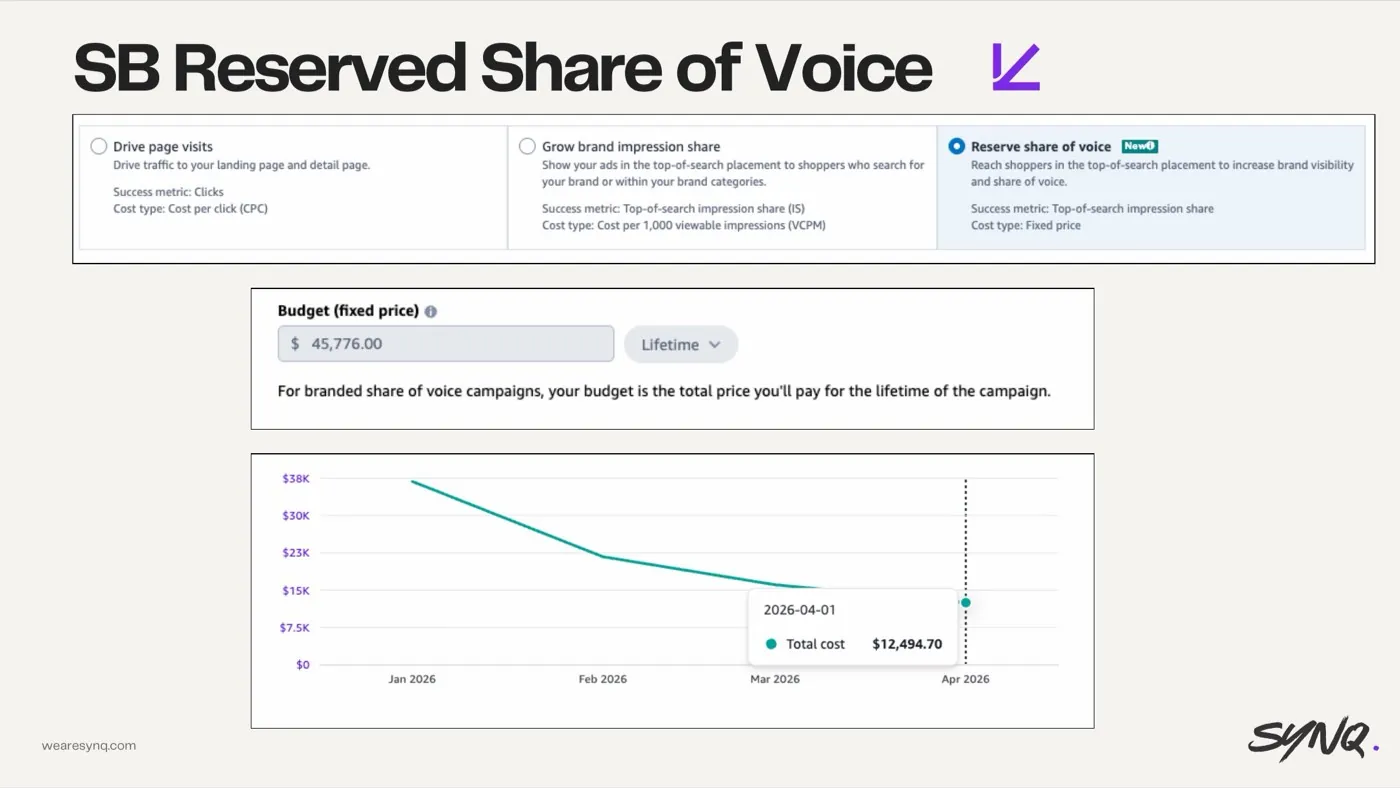
SB “Reserve share of voice” is a new Sponsored Brands objective that buys the Top-of-Search slot for your brand at a fixed lifetime price — not CPC, not VCPM. The committed budget can run into the tens of thousands paid up front, which is a very different risk profile from a daily CPC budget you can pause at any time.
Every new feature ships with a default objective, cost type, and budget. Before you enable one, confirm the cost type (CPC vs VCPM vs fixed price) and whether it actually buys incremental visibility you can't get more cheaply somewhere else.